
 Scoop has an Ethical Paywall


How Marketers Are Leveraging AI For The Holiday Season

The past couple of years has seen staggering growth in the use of AI across various industries. In marketing alone, AI usage is expected to hit $47 billion in 2025, on course to hit $107 billion by 2028.
The two channels of growth have come from Generative AI technologies and automation. Both these tools have been phenomenal for the marketing industry, helping companies scale up in ways that were unimaginable just a few years back.
What exactly is Generative AI
In simple words, Generative AI is the use of an existing repository of information to create new and unique information. If you have been online anytime in the past two years, you may have already come across or used tools like ChatGPT and Claude.
Similar to traditional search engines like Google, ChatGPT also crawls billions of webpages and holds all this information in its servers. When you ask a question, it pulls in the relevant sources, and uses all this information to derive a helpful and direct answer to your question.
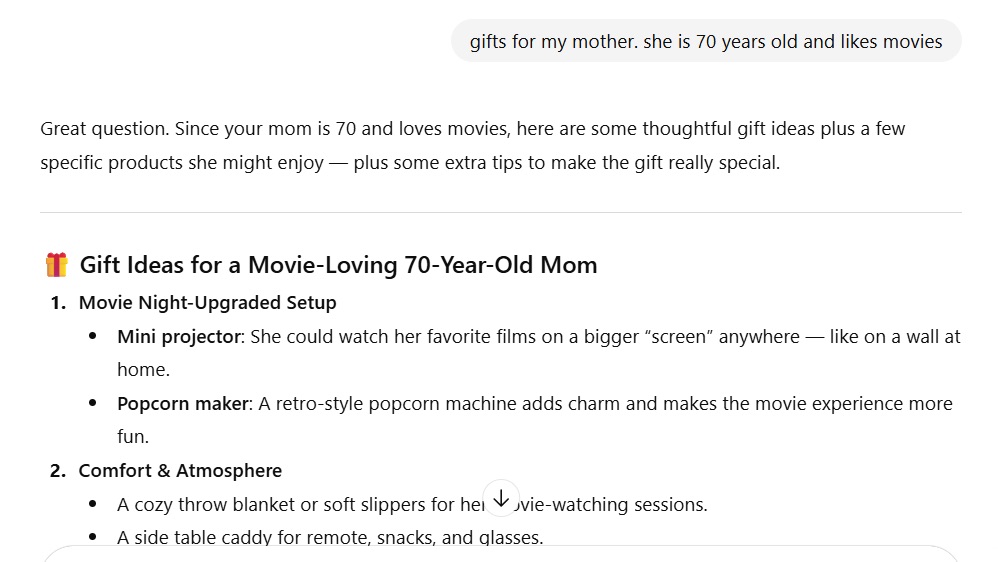
But this is barely scraping the surface with Generative AI. Modern GenAI tools are capable of producing high quality images, and videos. You don’t need a 100 person team from Pixar to make animation movies anymore - a kid with the right GenAI tools can build something equally fancy.
Automation holds the key to the future
Marketing automation has been around for several years now. However, with AI in the mix, this segment has seen prolific growth. GetResponse, an email marketing automation tool that has been around for over 25 years now has emerged one of the leading players in the AI-driven marketing automation space.
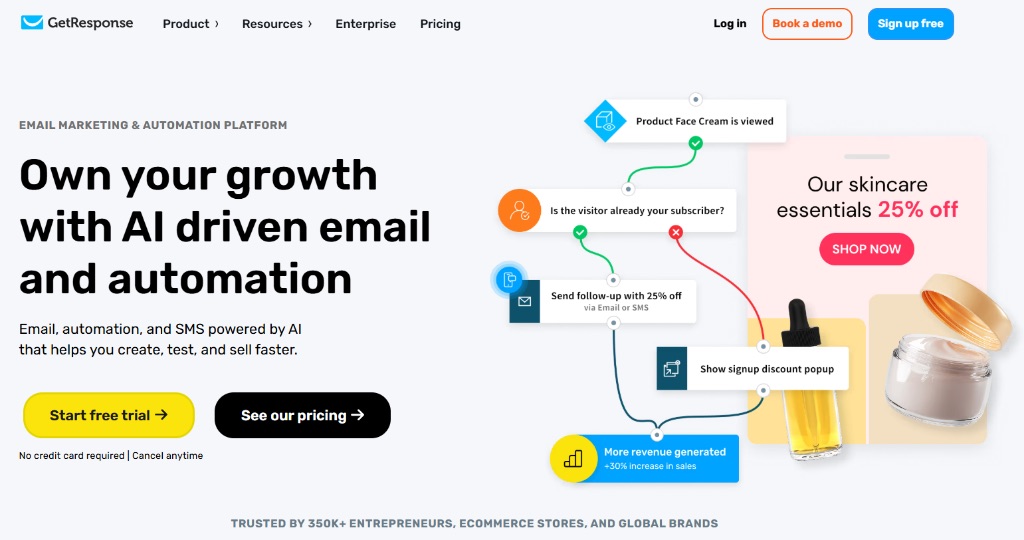
Today, marketing teams do not have to work on producing unique creatives for different segments. Tools like GetResponse help users plan the automation workflow and produce content specific to various segments in a matter of clicks.
Similar work with AI-driven automation is also afoot across different marketing segments like demand forecasting, predictive analytics, ad optimization, media spend optimization, dynamic pricing, voice assistants, gamification, and support efficiency.
The holiday marketing season is here
One of the biggest AI moves that marketers are recently invested in is in AI SEO, also called GEO, AIO, or just SEO. This is search engine optimization (SEO) that is focused on driving higher visibility across AI-search engines like Google’s AI mode, ChatGPT, and Perplexity.
Studies show that 1 in 10 shoppers today start their holiday gifting research with AI search engines. Optimizing your business for these engines means higher visibility and sales.
According to referral marketing software company ReferralCandy, eCommerce businesses rely heavily on AI-assisted features on platforms like Shopify to drive higher sales. These platforms offer A/B testing campaigns to test various elements on your shopping pages to drive higher conversion.
Another big area for AI in holiday marketing is in predictive analytics. AI tools can analyze past user behavior to identify their intent and likelihood of purchase. This can be used to segment users based on their anticipated action. Users who are likely to be dormant could be heavily incentivized with coupons while those who are most likely to make a purchase could be incentivized with cashback offers.
Ad optimization is by far seeing the biggest impact from AI this holiday season. Popular ad networks like Meta and Google are today heavily AI-driven. These platforms use AI to drive optimization of ad creatives and budget management so that advertisers no longer have to track their performance incessantly.
Thanks to AI-based landing page builders, a large percentage of marketers are expected to hand over the reins of customer acquisition to AI this holiday.
But we are not there yet…
There is always a but, and it is that despite all the heavy investments and promises we see with AI, we are not there yet. AI still needs manual supervision to ensure campaigns are executing as well as it would, were it to be handled by a human.
Call it the human inability to let go of control, or the fact that AI is still an emerging field, the truth is that human managers are still a quintessential element in the holiday marketing plan. But AI tools have ensured that campaigns need fewer manual interventions, and have higher ROI.
Perhaps the holiday season of 2026 will truly be a milestone to remember as far as how independently AI can drive marketing campaigns for your business.
 Banking Ombudsman Scheme: Fraud Check Delays Well Worth The Inconvenience, Says Banking Ombudsman
 Asia Pacific AML: NZ’s Financial Crime Gap - Beyond The 'Number 8 Wire' Mentality
 Westpac New Zealand: Kiwi Households Adapting Despite Widespread Cost Pressure Concerns, Westpac Survey Shows
 University of Auckland: Kids’ Screen Use Linked To Long-Term Deficits In Self-Control And Attention
 University of Auckland: Research To Address Equity In STEM For Māori, Pacific And Female Students
 Stats NZ: Economic Impacts On New Zealand From Conflict In The Middle East – Report


