
 Scoop has an Ethical Paywall


The Serious Business Of Play

How play breaks down hierarchy and fosters psychological safety
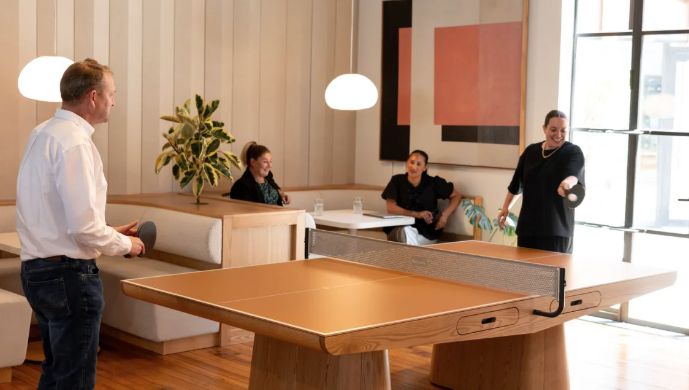
Harrows, who are champions of social spaces, says that when people gather around a game, titles and roles fade into the background. What matters is the next rally, the quick exchange, the laughter, and the shared energy of the moment. That’s where genuine connection happens, and where the usual layers of hierarchy begin to soften.
In traditional workplaces, structure defines behaviour. Leaders lead, teams follow. The flow of ideas moves in predictable directions. Introduce play and everything shifts. Suddenly, the manager and the intern are side by side, meeting on equal ground. They compete, react, and laugh together.
It is in those moments that barriers fall away, and we start to see each other as peers rather than positions.
A study from the Journal of Organisational Behaviour found that group-based, spontaneous play among colleagues increased what researchers call *“psychological safety.” This is the shared sense that it’s safe to speak up, to experiment, and to make mistakes without fear of judgment. When that safety exists, collaboration improves. Ideas move more freely. People listen differently. The study reinforces what many workplaces and communities have discovered through experience: play is not just fun, it’s a powerful tool for building trust and culture.
By introducing activators for play into an environment, we can shape the user experience. The spaces we design influence how people behave. Physical environments can either reinforce hierarchy or dissolve it.
Embedding environmental triggers for play creates opportunities for spontaneous connection and collaboration.
Environmental triggers are not passive; they are intentional design elements that invite interaction. They act as signals that grant permission to step away from rigid roles and engage as equals. These triggers can take many forms:
- Shared Objects: Items like a table tennis setup, board games, or collaborative puzzles become focal points for informal interaction.
- Flexible Spaces: Open areas with movable furniture encourage fluidity and adaptability, making it easy for people to gather and play.
- Visual Signals: Bright colors, playful signage, or art installations can subtly communicate that creativity and fun are welcome.
- Accessible Placement: Positioning play elements in common areas—near kitchens, lounges, or entryways; ensures they are seen and used.
When environmental triggers for play are present, they lower social barriers and create micro-moments of connection.
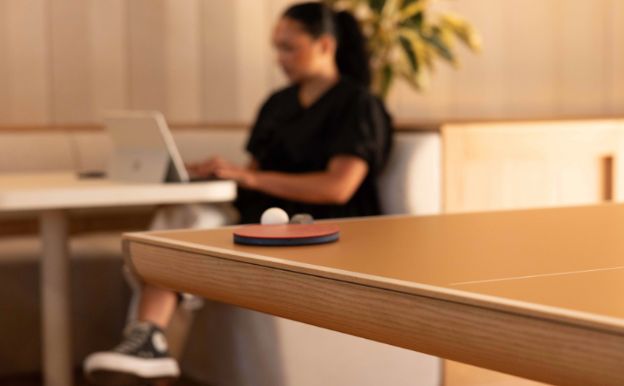
They transform the environment from a place of structured work into a space where psychological safety thrives. It’s how culture spreads quietly, through genuine human interaction.
Play builds trust, opens communication, and gives people permission to connect as equals. Play really is a serious business.
*Edmondson, A. C. (1999). Psychological safety and learning behavior in work teams. Journal of Organizational Behavior, 20(2), 123–143.
 Stats NZ: Economic Impacts On New Zealand From Conflict In The Middle East – Report
 Advertising Standards Authority: ASA Annual Report 2025 - Platform-Neutral Regulation Keeps Pace With Digital Advertising
 Science Media Centre: Lead Pipes Banned For New Plumbing – Expert Reaction
 New Zealand Young Physicists Trust: Auckland To Host The ‘World Cup Of Physics’ In 2027; Search Begins For Student-Designed Tournament Logo
 Oxfam Aotearoa: Top CEO Pay Increased 20 Times Faster Than Workers’ Pay In 2025
 Bill Bennett: TUANZ Report - Networks Built, Value Missing


