
 Scoop has an Ethical Paywall


Wellington Renters Pocketing Solid Savings In 2026
The national median weekly rent remained flat in January, holding at $620 for the second month in a row, according to the latest Trade Me Rental Price Index.
While the national figure was static from December, Trade Me Property Spokesperson, Casey Wylde, said the data reveals a multi-speed rental market across the country, with some regions experiencing significant price drops while others continue to climb.
Pōneke renters pocket solid savings
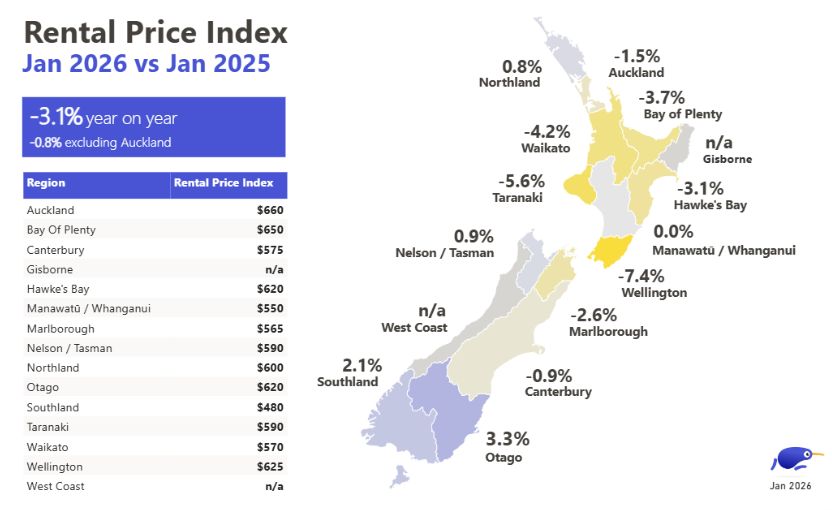
Year-on-year, the national median rent was down 3.1 per cent, or $20 per week but the most dramatic change was seen in the capital.
The median rent in the Wellington region plummeted by 7.4 per cent compared to January last year, landing at $625 per week.
“Those in Pōneke are currently $50 better off each week than they were this time last year, a fairly significant and no doubt welcome saving for tenants.”
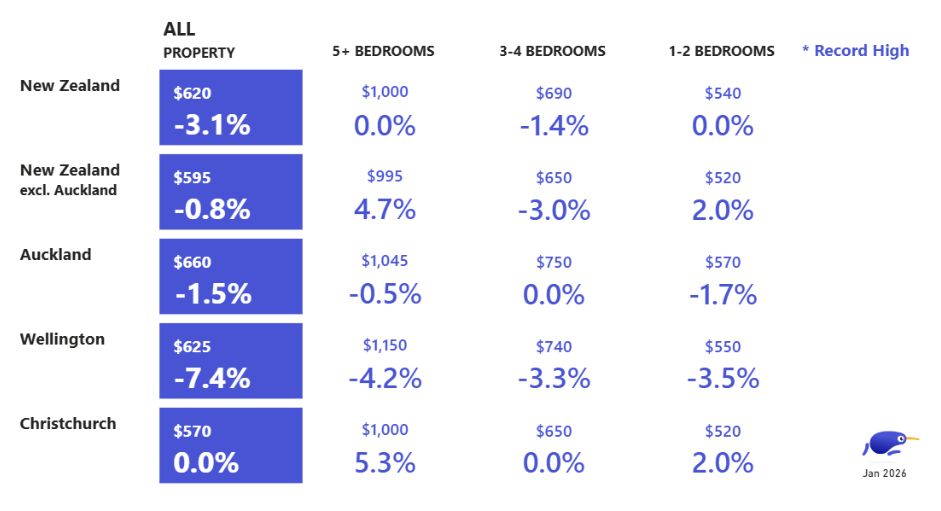
“If we look specifically at property size, it’s clear to see tenants in Wellington are benefiting across the board, which is in stark contrast to Auckland and Christchurch.”
The rising cost to renters in the lower South Island
Ms Wylde said other major centres also saw prices cool, with the median rent in Auckland falling 1.5 per cent year-on-year to $660. In Canterbury, the median rent is now $5 cheaper than the same time last year.
“While much of the country has seen rent fall over this timeframe, the lower South Island has seen solid growth, particularly Otago (+3.3 per cent) and Southland (+2.1 per cent) which is putting pressure on tenants in these regions.
“Renters in Otago, especially Dunedin and the Queenstown Lakes district will be feeling the pinch with demand outstripping supply making for a competitive landscape.”
Year-on-year demand, measured by search activity, is up more than 6 per cent in the Queenstown area, with supply down 27 per cent. In Dunedin, supply has fallen by nine per cent while demand is up 12 per cent.
Supply and demand
“January is always the busiest time of year for the rental market, and 2026 was no exception,” said Ms Wylde.
“Nationally, we saw tenant demand spike by 41 per cent compared with December, but this was met with a 45 per cent surge in the number of properties for rent. This balance between supply and demand is a major contributor to the current pricing stability.”
Year-on-year figures show overall demand to be ahead of supply.
“We’ve seen supply fall one per cent on January 2025, with demand ahead and sitting around the 12 per cent mark.”
 Bill Bennett: Fixed Voice Rules Head For Deregulation
 UN Department of Global Communications: United Nations Proposes New Global Dashboard To Measure Progress Beyond GDP
 Banking Ombudsman Scheme: Fraud Check Delays Well Worth The Inconvenience, Says Banking Ombudsman
 Asia Pacific AML: NZ’s Financial Crime Gap - Beyond The 'Number 8 Wire' Mentality
 Westpac New Zealand: Kiwi Households Adapting Despite Widespread Cost Pressure Concerns, Westpac Survey Shows
 University of Auckland: Kids’ Screen Use Linked To Long-Term Deficits In Self-Control And Attention


