
 Scoop has an Ethical Paywall


The Shift From Static To Dynamic: How AI Is Reshaping Digital Content Strategies In 2026

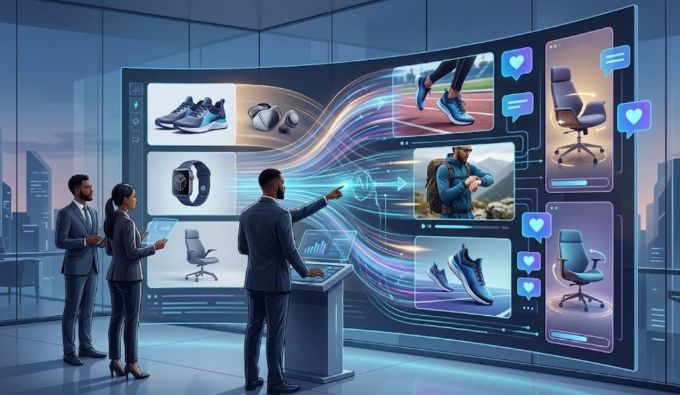
- AI-powered image-to-video tools are giving brands a cost-effective way to turn existing visual assets into high-engagement content — reshaping marketing workflows across industries.
Auckland, New Zealand — April 2026 — There is no longer any serious debate about whether video content matters. In 2026, short-form video has become the primary language of digital engagement. TikTok, Instagram Reels, and YouTube Shorts have trained global audiences to expect motion, sound, and narrative — even from the brands they follow. According to Wyzowl's 2026 State of Video Marketing report, around 91 percent of businesses now use video as a marketing tool, and roughly 82 percent of marketers report positive returns on their video investments. Consumer preferences are equally clear: SellersCommerce research indicates 78 percent of online users say they prefer learning about a product through a short video rather than reading text.
Yet for many organisations — particularly small and mid-sized businesses, independent creators, and lean marketing teams — this shift has created an uncomfortable paradox. The demand for video has never been higher, but the cost and complexity of producing it remain formidable. Traditional video production requires scriptwriting, filming, editing, post-production, and platform-specific formatting. Even a simple 30-second product clip can take days and thousands of dollars to deliver at professional quality. Marketing teams that cannot keep pace with the content velocity of algorithmic feeds risk losing visibility entirely — buried beneath competitors who publish more frequently and in the formats platforms prefer.
The result is a widening gap between what audiences expect and what most teams can realistically produce. And that gap is only growing as platforms continue to prioritise video in their ranking algorithms.
Billions in Static Assets, Sitting Idle
What makes this problem especially frustrating is that most brands are not short on visual content — they are short on the right format of visual content. Years of investment in photography, product imagery, campaign graphics, and brand illustrations have given businesses vast libraries of polished static assets. E-commerce catalogues alone contain millions of high-resolution product images that were painstakingly shot and retouched. Creative agencies hold archives of campaign photography spanning decades.
In the era of the static web, these assets performed well. A compelling product photo on a landing page or a striking banner ad could capture attention and drive conversions. But the rules of engagement have shifted decisively. Research consistently shows that short-form video generates significantly higher engagement than static imagery — social media posts featuring video receive roughly 3.4 times more shares, and product pages with video see markedly higher conversion rates. According to Netimperative data, users spend an estimated 88 percent more time on websites that feature video content compared to those that rely on images and text alone.
For many businesses, their existing image libraries now represent an enormous untapped reservoir of potential. The photography is excellent. The brand identity is intact. The compositions are strong. What is missing is motion — the temporal dimension that transforms a still frame into something that can hold attention in a fast-scrolling feed. Until recently, unlocking that dimension required going back to the beginning of the production process. That is no longer the case.
AI Bridges the Gap: From Still Image to Moving Content
This is where generative AI is changing the equation in meaningful ways. Over the past 18 months, advances in computer vision and diffusion-based models have made it possible to generate fluid, realistic motion from a single static image. The technology works by analysing spatial and contextual information in a photograph — understanding depth, lighting, subject boundaries, and the physics of how objects naturally move — then synthesising new frames that extend the image across time.
Modern AI models move well beyond basic parallax effects or standard zooms, which audiences now easily recognise as artificial. Instead, they predict pixel-level trajectories and generate intermediate frames with physically accurate motion. Hair responds to implied wind. Water flows with realistic turbulence. Fabric drapes and shifts with the weight and texture of the material. The result is motion that feels natural rather than synthetic — a critical threshold for brand-safe, professional content.
The implications for content teams are substantial. Rather than commissioning entirely new video shoots for every campaign, marketing departments can now take existing brand photography and convert image to video using AI-powered tools. A flat product photo gains subtle rotation and dynamic lighting shifts. A landscape shot develops atmospheric movement — clouds drifting, water flowing, foliage swaying. A fashion image acquires the gentle motion of fabric and natural human posture.
Platforms such as Cutout.pro have positioned themselves at this intersection, offering accessible browser-based workflows that allow users to transform still images into short video clips without requiring specialised hardware or deep technical expertise. The significance lies not in any single platform, but in the broader trend: AI is collapsing the production pipeline from days to minutes, and from thousands of dollars to near-zero marginal cost.
Real-World Applications Already Taking Shape
The practical use cases are not theoretical — they are already well-established across multiple industries.
E-Commerce and Product Marketing
Online retailers face a particularly acute version of the video challenge. With thousands of SKUs in a typical catalogue, producing individual video content for each product is economically impractical using traditional methods. AI-generated product videos offer a scalable alternative: a standard product image can be transformed into a short clip featuring dynamic lighting, gentle rotation, or contextual motion. According to Vimmi and WebFX benchmarks, product pages featuring video achieve conversion rates 40 to 80 percent higher than those relying on static images alone. For high-volume e-commerce operations, even modest conversion improvements translate into significant revenue impact.
Social Media and Campaign Content
For social media managers operating under relentless content calendars, image-to-video tools address a practical bottleneck. A single campaign photograph can be repurposed into multiple video variants optimised for different platforms and aspect ratios. An event poster becomes a short animated teaser. A brand portrait gains cinematic movement for a story or reel. This is particularly valuable for brands managing multiple regional markets — the same core visual asset can be dynamically adapted into dozens of variations, each tailored to the format and pacing expectations of its destination platform.
Independent Creators and Small Teams
Perhaps the most significant long-term impact is the democratisation of motion content. Freelancers, solo creators, and small agencies that previously lacked the budget for video production can now produce dynamic content that competes visually with output from much larger teams. For a solo content creator, the ability to generate a compelling short video from an existing illustration or photograph — without learning complex animation software or investing in camera equipment — represents a meaningful expansion of creative possibility.
The Broader Market Context
The growth of AI-powered video tools is not occurring in isolation. The global AI video generation market is estimated to have reached several billion dollars in value in 2026, with compound annual growth rates exceeding 30 percent. Major cloud providers now offer video generation APIs, and dozens of startups have attracted significant venture funding to compete in this space.
Image-to-video workflows specifically have emerged as one of the fastest-growing segments. Data from Vivideo's 2026 State of AI Video report indicates that roughly a third of all AI video generation requests now begin with a visual input rather than a text prompt — a figure that has climbed steadily as users have discovered that starting from an existing image provides far greater control over the output. The industry is moving away from prompt-based guesswork toward guided visual construction, making AI video tools increasingly practical for professional creative workflows.
Looking Ahead
If current trajectories hold, the distinction between "static content" and "video content" may become increasingly artificial. Industry projections suggest that by 2030, the vast majority of online video will involve some form of AI assistance. For marketing teams, this signals a strategic imperative: brands that learn to integrate AI-powered content generation into their workflows today will be substantially better positioned for the content demands of tomorrow.
It is worth noting that the technology is a tool, not a replacement for creative judgment. The most effective applications of AI video generation are those guided by strong creative direction — where human taste, brand sensibility, and narrative instinct shape how the technology is deployed. AI can generate motion from a still image with remarkable fidelity. Deciding which image to animate, how it should move, and what story it should tell remains a fundamentally human task.
The shift from static to dynamic content is not a passing trend. It is a structural change in how digital communication works, driven by audience behaviour, platform algorithms, and accessible AI tools that make motion content achievable at virtually any scale. For marketing teams and content creators looking to stay ahead, the first step may be simpler than expected: take a fresh look at the image library you already have — and consider what those assets could become when they start to move.
 Asia Pacific AML: NZ’s Financial Crime Gap - Beyond The 'Number 8 Wire' Mentality
 Westpac New Zealand: Kiwi Households Adapting Despite Widespread Cost Pressure Concerns, Westpac Survey Shows
 University of Auckland: Kids’ Screen Use Linked To Long-Term Deficits In Self-Control And Attention
 University of Auckland: Research To Address Equity In STEM For Māori, Pacific And Female Students
 Stats NZ: Economic Impacts On New Zealand From Conflict In The Middle East – Report
 Advertising Standards Authority: ASA Annual Report 2025 - Platform-Neutral Regulation Keeps Pace With Digital Advertising


