
 Scoop has an Ethical Paywall


National Property Prices Hold Steady As Southland And Small Homes Lead Growth
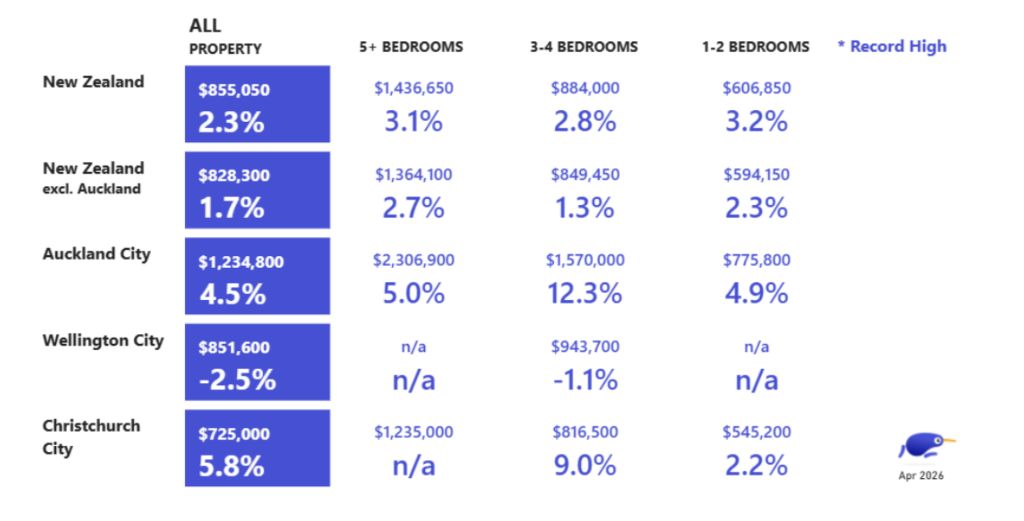
The national average asking price in Aotearoa reached $855,050 in April, a 2.3 per cent increase compared to a year ago, according to the latest Trade Me Property Pulse Report.
The report highlights a market characterised by stability and increasing choice for buyers, with new listings up 3.3 per cent annually. Trade Me Property Customer Director Gavin Lloyd says the data reflects a balanced market.
“We’re seeing a steady annual climb in prices alongside a healthy increase in stock. This combination gives buyers more options and suggests a level of confidence from sellers as we head toward the cooler months,” says Mr Lloyd.
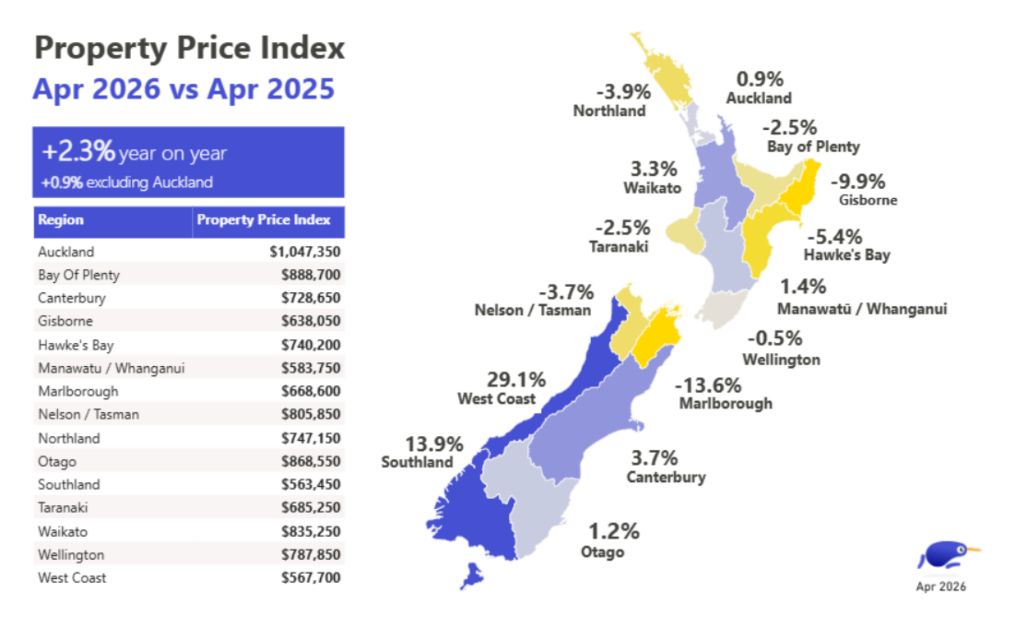
Regional standouts and market volatility
While the national trend is one of steady growth, Southland has proven to be a significant regional mover with asking prices in the region up nearly 14 per cent year-on-year, reaching an average of $563,450 in April.
The West Coast also recorded a sharp annual jump of 29 per cent. However, Mr Lloyd cautions that these smaller regions can experience more price fluctuation.
“Smaller markets like the West Coast often see higher volatility because even a small shift in the volume or type of stock can significantly impact the average asking price,” he explains.
In Tāmaki Makaurau, prices remained resilient. Despite a minor 2 per cent month-on-month dip, Auckland’s average asking price sits comfortably over the million dollar mark at $1,047,350, up 0.9 per cent on April 2025.
Small homes find their stride
Interest in smaller, more affordable dwellings continues to outpace larger family homes, with asking prices for 1-2 bedroom properties up 3.2 per cent annually to $606,850, while the average for 3-4 bedroom homes grew by a more modest 2.8 per cent.
“The 1-2 bedroom segment is a key indicator of market health, as it's often the entry point for first-home buyers. Seeing this segment outperform the national average highlights where the current competitive energy is focused,” says Mr Lloyd.
 Banking Ombudsman Scheme: Fraud Check Delays Well Worth The Inconvenience, Says Banking Ombudsman
 Asia Pacific AML: NZ’s Financial Crime Gap - Beyond The 'Number 8 Wire' Mentality
 Westpac New Zealand: Kiwi Households Adapting Despite Widespread Cost Pressure Concerns, Westpac Survey Shows
 University of Auckland: Kids’ Screen Use Linked To Long-Term Deficits In Self-Control And Attention
 University of Auckland: Research To Address Equity In STEM For Māori, Pacific And Female Students
 Stats NZ: Economic Impacts On New Zealand From Conflict In The Middle East – Report


