
 Scoop has an Ethical Paywall


It’s All In The Casting - Circa Presents '2:22 A Ghost Story'

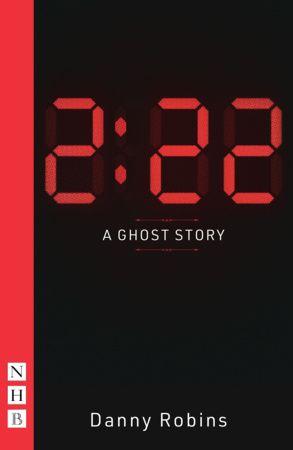
Showing more resilience than you need to get a refund for over-priced products from Mount Kiwi, Danny Robins’ haunted-house drama has spawned six West End productions, a variety of casts, and multiple theatre awards since it opened at London’s Noël Coward Theatre in 2021.
Innovative UK television producer Charlie Parsons (The Big Breakfast, Survivor) has seamlessly transitioned into a successful theatrical impresario and now he and his partners have brought the show to Wellington’s Circa Theatre. In a recent conversation, he explained how casting has been crucial to it’s enduring appeal -
“A Ghost Story originated during the Covid pandemic. We were very lucky because, after closing at the Noël Coward Theatre, we discovered the Gielgud was available. It had been hosting Dear Evan Hanson, but they decided to pause it temporarily, so we simply moved in and built our set in front of theirs.”
“I knew it was different from anything else on offer at the time, but never expected it to take off in the way it did. In hindsight, I put this down to the fact that our audiences skewed younger and were not traditional theatre goers. Like the film director Nic Roeg, we deliberately cast people who had achieved a level of fame in fields other than acting and it became a launchpad for a couple of singers who fancied treading the boards.”
“Although she comes from a theatrical family, Lily Allen had never really acted before, but sufficiently up-skilled her dramatic chops during rehearsals to earn an Olivier Award nomination for Best Actress and win a WhatsOn Stage Award. Cheryl Tweedy, who rose to fame as a member of pop girl group Girls Aloud, then made her West End debut in the role with an equally impressive performance.”
“The play has been such a runaway success that we’re now taking it global. It’s already been staged in Sydney and, following a trial run in Los Angeles, we plan to open in New York in the fall of 2026. Audiences are drawn to the show not only because it's funny, well written, and literally scares them out of their seats, but also because it has a darker side that provides a deeper perspective on the pitfalls of modern urban lifestyles and relationships.”
* * *
With its slowly metastasising sense of suspense and mounting dread, the sheer entertainment value of Robins’ ghost story will undoubtedly win over Wellington audiences as well.
Over-anxious new mother Jenny (Pamela Sidhu) is struggling and would clearly appreciate some support from her husband Sam (Regan Taylor). She also strongly suspects the new house they’re in the process of renovating may be haunted. Jenny, the product of a devout Catholic upbringing, has heard footsteps and other spooky sounds coming from the monitor in her baby daughter’s room at exactly the same time over the past three nights.
She insists the sounds are real, while sarcastic rationalist Sam (who just got back from a trip to the Channel island of Sark - geddit?) patronisingly mansplains them away as the result of post-partum paranoia rather than the paranormal. When the pair throw a dinner party for his old pal Lauren (Serena Cotton) and her new tradie boyfriend Ben (Jack Sergent-Shadbolt), the two couples decide to hang out together and find out if the ghost returns.
Jenny’s religious faith begins as a blessing and ends as curse as she paces around anxiously tidying up the set, while Sam remains adamantly hostile to any possibility of a ghost haunting their baby and spends most of the time bragging about his superior rationality at her expense. Although she’s more sympathetic, Lauren is a trained psychologist who believes all fears are based solely in the mind.
Ben, however, not only firmly believes in the supernatural, but also (in the play’s best short monologue) rants against the way in which gentrification papers over the lives of the poor. As the oversized red numerals of the digital clock tick slowly and inexorably down, his role is primarily to challenge Sam, pointing out their class differences before diving deep into the mystic. As one Guardian reviewer astutely remarked, “the ghosts of the underclass are buried behind the walls of the wealthy.”
Robins’ revisits these twinned themes of belief and rationality in a sort of faux-Socratic dialogue scattered throughout his clever script. Following the modern horror film template of turning monsters into metaphors for psychological states, he sprinkles it lightly with sharp and subtle clues. In this case, the ghost is an ectoplasmic embodiment of marital discord and the dramatic tension generated more by the unhappy couple than between the living and the dead. Following in the footsteps of The Mousetrap, the cast implore audiences not to spoil the final twist in the tale, which cleverly forces us back to the beginning to reassess everything.
Marcus McShane’s lighting design is full of flash effects, the patches of paint on the pre-renovated walls of Chris Reddington’s set both literally and symbolically separate the old decor from the tacky green bar stools standing opposite, but the eerie sound effects supplied by Dan Elliott could have been amped up a few notches.
Bernard Hermann’s stabbing strings in Psycho (neatly lifted by George Martin for the opening of Eleanor Rigby) provides the textbook example of the power of counterposing moments of complete quiet with sudden, angular musical interruptions. Circa’s production, however, has only Portishead as background music to the players engaging in endless circular arguments about the irrational nature off both faith and fear.
The main problem is Peter Sweeney’s somewhat leaden direction - and here again, of course, casting proves crucial. Issues surrounding class, ethnicity, and immigration would have been better highlighted if the actors had simply swapped roles - maybe even for every other performance. Sidhu’s gestures are awkward and her voice muted, while Taylor also muffles his middle-class animosity towards Ben, who could equally have well have salted his working-class resentment with a bit more venom. Cotton, who provides this production’s most nuanced and naturalistic performance as a poised and angular American slowly sliding into alcoholic melancholy, does better. For some reason, they all spend a lot of time going to the bathroom.
After its intriguing production of Blithe Spirit earlier this year (which also raised a few equally questionable casting decisions), Circa could almost be accused of exploiting our enduring fascination with the supernatural. This sleight of hand of this delightful show is neither gruesome nor gory enough for nightmares and there were certainly more than a few moments when the audience was jolted. But it won’t, as Kenneth Tynan once observed, “set the Thames on fire.”
Howard Davis
Scoop Arts Editor
Educated at Cambridge and UCLA; worked on several major Hollywood feature films and as a Kundalini Yoga instructor in Los Angeles; currently enjoying life in Wellington.
 NZ Psychological Society: Remembering The Past Guides Our Future
  New Zealand Olympic Committee: Motherhood In Focus For Wāhine Toa Graduates Ahead Of Mother's Day
 Early Childhood New Zealand: Budget 2026 Must Protect The Future Of Quality Early Childhood Education
 Creative New Zealand: Aotearoa Manu Take World Art Stage As 61st Venice Biennale Opens
 Country Music Honours: 2026 Country Music Honours Finalists Announced
 Mana Mokopuna: Children’s Commissioner Welcomes New Youth Mental Health And Suicide Prevention Services In Te Tai Tokerau