
 Scoop has an Ethical Paywall


Cook Strait Swim Highlights Failure To Fund Protection Of National Collections
The Director of Tūhura Otago Museum says New Zealand’s nationally significant museum collections are being put at risk, after the Museum’s Chair was forced to abandon a Cook Strait swim undertaken to raise money for basic fire protection.
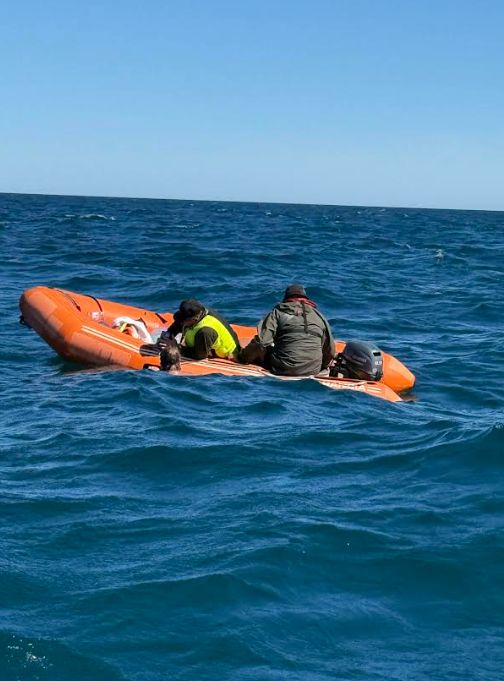
This week, Museum Chair David Hutchinson attempted the 23-kilometre Cook Strait swim to fund the installation of a sprinkler system at Tūhura Otago Museum, not for a new attraction or gallery, but to protect nearly two million collection items from fire. After almost eight hours in the water, the swim was abandoned following a decision by Mr Hutchinson’s support team due to unsafe conditions caused by very heavy winds.
“David showed extraordinary determination and commitment,” said Tūhura Otago Museum Director Ian Griffin. “David was determined to stay in the water, but his support team ultimately made the call in conditions beyond his control, the message behind the swim could not be clearer.”
“These are some of the most nationally significant collections in the country,” Dr Griffin said. “They include irreplaceable taonga Māori, scientific specimens, archives, and research material that belong to all New Zealanders. And yet, we are fundraising for sprinklers.”
Dr Griffin said the attempt has already brought significant national attention to a systemic issue facing museums across Aotearoa.
“We are entrusted with caring for collections of national importance, but we receive little to no direct central government funding to protect them,” he said. “That leaves major gaps when it comes to essential infrastructure, the absolute basics needed to keep collections safe.”
Despite not completing the swim, Mr Hutchinson has already raised more than $7,000 through a Givealittle page, with donations continuing to climb as the wider community recognises the importance of the issue.
“The public response has been incredible,” said Marketing Manager Charlie Buchan. “People understand what is at stake. They can see the importance of protecting these collections, even when the government currently cannot, and they are donating, sharing the story, and engaging online in an impactful way.”
Tūhura Otago Museum generates more than 50 percent of its operating income through commercial activity, including its Science Centre, Planetarium, retail, events, venue hire, and sponsorship. The remaining funding supports free public access, education programmes, and the housing and protection of its extensive collections.
The Museum is a charitable trust and is not owned by a council. It receives funding support from Dunedin City Council, Clutha District Council, Waitaki District Council, and Central Otago District Council, support Dr Griffin says the Museum is deeply grateful for.
“Those councils help keep our doors open for the community,” he said. “But Otago has a relatively small regional population. Ratepayer funding can only ever go so far, and it cannot reasonably cover the cost of protecting collections of national significance on behalf of the entire country.”
Dr Griffin pointed to a growing mismatch between national expectations and national investment.
“There is a $22 million per annum government fund for Nationally Significant Collections and Databases,” he said. “Not a single dollar of that goes to museum collections. That is a serious flaw in the system.”
Across New Zealand, museums are facing increasing pressure as costs rise and public funding fails to keep pace. Staff reductions, delayed maintenance, and postponed conservation work are becoming common, even at major institutions.
“From the outside, museums look busy and successful,” said Dr Griffin. “But behind the scenes, many are struggling to fund the minimum things like fire protection, safe storage, and buildings that don’t leak.”
He said the issue is not about expansion or new developments.
“This is not about building big and new,” Dr Griffin said. “It’s about protecting what already exists. Once collections are damaged or lost, they are gone forever. You cannot replace centuries of knowledge, research, and cultural heritage.”
Dr Griffin said museums should be recognised as essential national infrastructure, supporting tourism, education, research, and New Zealand’s collective identity.
“David’s swim has already achieved something powerful,” he said. “It has shone a national spotlight on an issue that should never have been invisible. In a sensible country, safeguarding nationally significant collections would not require someone to swim the Cook Strait.”
 Early Childhood New Zealand: Budget 2026 Must Protect The Future Of Quality Early Childhood Education
 Creative New Zealand: Aotearoa Manu Take World Art Stage As 61st Venice Biennale Opens
 Country Music Honours: 2026 Country Music Honours Finalists Announced
 Mana Mokopuna: Children’s Commissioner Welcomes New Youth Mental Health And Suicide Prevention Services In Te Tai Tokerau
 New Zealand Kindergartens: 100-Years On - Investing In Teacher-Led, Quality Early Childhood Education Is Investing In Aotearoa’s Future
 Dry July: Thousands Set To Go Alcohol Free This July As Cancer Diagnoses Continue To Rise Across Aotearoa