
 Scoop has an Ethical Paywall


Newly Promoted Professor Alys Longley Weaves Together Academia And Performance Art
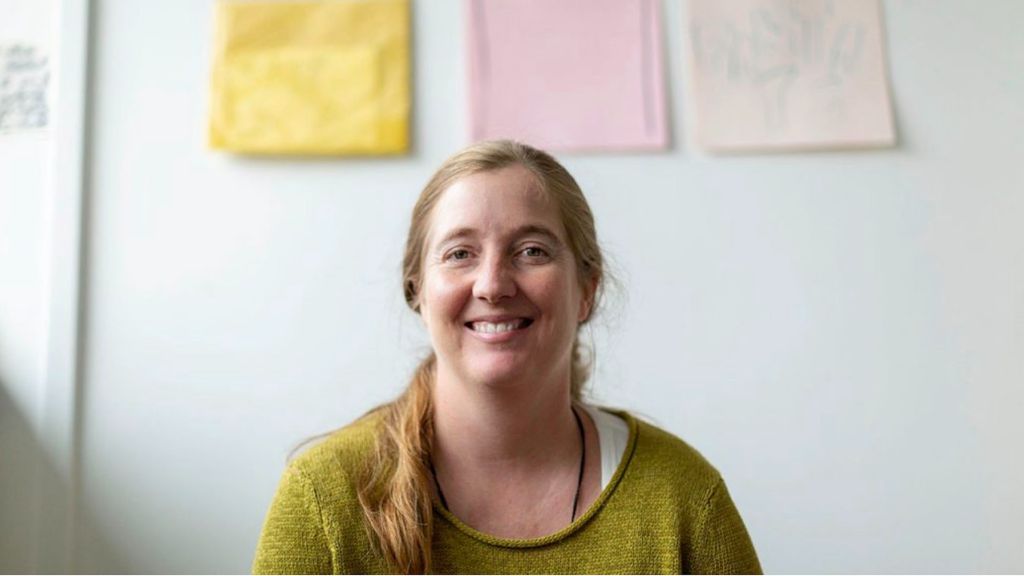
For those familiar with scholar Dr Alys Longley, her radically collaborative Inaugural Lecture, redefining what it means to be an artist-academic, would have come as no surprise.
The newly promoted University of Auckland Professor wove together the various strands and mediums of her practice as academic and performance artist — showcasing performance, poetry and pedagogy at her Inaugural Lecture on 7 September at the Kenneth Myers Centre.
“I’m not a brilliant dancer, I’m not a brilliant actor, I’m not a brilliant visual artist, I’m not a brilliant poet but I can bring those things together in a way that is my work, and be able to collaborate across those different media, it’s a sort of approach that is not very typical, where you’re not a specialist, but in your ability to move across these things you can create a language that is very specific.”
She says it was this non-normative approach to different media, that offers something and of course always having collaborators that are experts so: “that you’re caring for the disciplinary expertise of wherever your field is.”
This ethos—of leaning into vulnerability, of privileging process over perfection—was woven throughout the lecture, which featured live and recorded contributions from a constellation of collaborators across Aotearoa and the globe.
Among those present were partner and sound artist Jeffrey Holdaway, choreographer and queer theorist Val Smith, artist and lighting designer Sean Curham, dramaturg Kristian Larsen and scholar Sean Sturm.
Their presence was not incidental—it was integral. “My work wouldn’t be what it is without our us,” Longley said. “It is an us that extends to a much wider family of collaborators… some of whom are present even across epic distances.”
Voices from Santiago and Stockholm—Francisco González Castro and Pavle Heidler—echoed through the theatre, reminding the audience that Longley’s practice is transnational, multilingual and deeply relational. Her collaborations are sustained by energy, care, and a commitment to dissolving borders—geopolitical, disciplinary and conceptual.
A recurring motif in the lecture was cardboard—humble, recycled and universal.
“Cardboard has been something we can rely on no matter what—like friendship,” Longley said. “It’s a leveller… an inclusive, accessible material that has allowed me and my collaborators in different parts of the world to work with a common material, regardless of our funding or support systems.”
Her lecture was punctuated by poetry,
including a reading from Chilean poet Nicanor
Parra:
“I wish to make a noise with my feet / I want
my soul to find its proper body.”
The line became a
refrain on the night, symbolising the importance of embodied
knowledge and the celebration of physical
difference.
“To find one’s proper body,” Longley explained, “is to understand embodiment as central to knowing… to push back against any hierarchy of mobility or movement.”
She challenged the university to make space for students to fall, to make messes, and to be caught in their learning journeys.
“How can we allow students to fall safely as part of their learning, and to catch each other?” she asked.
“How can we best protect the right to make a mess as part of university study, and the responsibility of learning how to clean those messes up?”
Longley’s lecture was also a
meditation on care, touch and the politics of connection.
Reflecting on her editorial work with Chilean artist Máximo
Corvalán-Pincheira, she shared a bilingual poem that
explored the aftermath of political violence and the plural
authorship of loss.
“Many of these works were authored
by loss… we are all of each other.”
She cited philosopher Rosi Braidotti, artist Francis Alÿs, musician PJ Harvey and dance pioneer Simone Forti to argue for the necessity of creative education in navigating the precarious future of our species.
“Movement allows us to think in new directions,” she said. “It’s at the heart of how I understand research, writing, knowledge and education.”
Her closing remarks were a call to action:
“This isn’t a solo practice—it’s a practice of togethering.”
She urged the University to uphold Te Tiriti o Waitangi, to honour Moana Nui a Kiwa, and to embrace creativity, imagination and risk-taking as central to education.
“For me, a civilized society is an artistically rich, critically vital, multicultural, ecologically sustainable and caring society where we appreciate each other in all our brilliant differences.”
She expressed her gratitude to everyone who came to support her, and acknowledged in particular her mum and dad, partner Jeffrey, and daughters Elena and Rosie for their support with all the long rehearsals and endless art and writing projects.
Professor Longley’s Inaugural Lecture was more than a celebration of her promotion - it was a manifesto for a more courageous, collaborative and caring academic future.
 Early Childhood New Zealand: Budget 2026 Must Protect The Future Of Quality Early Childhood Education
 Creative New Zealand: Aotearoa Manu Take World Art Stage As 61st Venice Biennale Opens
 Country Music Honours: 2026 Country Music Honours Finalists Announced
 Mana Mokopuna: Children’s Commissioner Welcomes New Youth Mental Health And Suicide Prevention Services In Te Tai Tokerau
 New Zealand Kindergartens: 100-Years On - Investing In Teacher-Led, Quality Early Childhood Education Is Investing In Aotearoa’s Future
 Dry July: Thousands Set To Go Alcohol Free This July As Cancer Diagnoses Continue To Rise Across Aotearoa