
 Scoop has an Ethical Paywall


Government Changes Climate Law To Prevent Lawsuits

Kate Newton , Climate Change Correspondent

The activist suing major New Zealand emitters over climate change damage says a law change blocking his case and others like it is "an affront to democracy".
The government announced on Tuesday it would amend climate laws to prevent companies from being sued over damage caused by greenhouse gas emissions.
The change will prevent findings of liability in torts - a type of civil case where one person or entity claims another has caused them harm.
Justice Minister Paul Goldsmith said it would apply to current and future cases - stopping a landmark case against Fonterra and five other major emitters in its tracks.
In 2024, iwi leader and activist Mike Smith was granted permission by the Supreme Court to sue Fonterra and other major dairy and fossil fuel companies.
He argued the companies, which collectively contributed about a third of New Zealand's emissions, had a legal duty to him and others in communities that are being damaged by the effects of greenhouse gas emissions.
The hearing, which was sent back to the High Court, was due to start in April next year.
Goldsmith said Smith's case was "creating uncertainty in business confidence and investments that the government must address".
The law change would "remove the possible development of a new regime that contradicts the framework Parliament has already enacted to respond to climate change".
New Zealand already had a legal framework to manage emissions, through the Climate Change Response Act and the Emissions Trading Scheme, he said.
"Our response to climate change is best managed by the government at a national level and not through piece-meal litigation in the courts."
Smith told Nine to Noon the government's decision was unprecedented and outrageous.
"It's an affront to democracy," he said.
"If Parliament can cancel a live court case, then no legal claim is secure at all, once it becomes politically inconvenient."
The legal case was asking the court to decide whether the companies involved could be held responsible for their emissions, he said.
He said they were not seeking costs of damages and it was instead a "public interest case" to establish the companies were liable. They hoped to prompt the companies to take action to reduce greenhouse emissions.
"These companies are not fools. They've got some of the best science available to them ... All we're asking is that they act responsibly, and if they can't decide that themselves then they need to be nudged along."
He countered Goldsmith's claims that the case was undermining business confidence.
"Real business confidence comes from predictable law - not from government intervention in active court cases."
What the big emitters should really worry about were the effects of climate change itself, Smith said.
"If the farmers are feeling nervous about [the case] and lobbying the government to have these cases struck out, if I were them I'd be more nervous about the the droughts that are pending... That's the real threat to their model."
Greenpeace labelled the change a "shocking abuse of power" that would protect climate polluters from paying for the damage they had caused.
Greenpeace executive director Russel Norman, told Midday Report, it was "outrageous" and he believed it was being done to protect large corporations.
"People will have their right to go to court removed.
"They intervened mid-case. It is an outrageous overreach."
Lawyers for Climate Action president Jenny Cooper KC said the decision was shortsighted.
"What it looks like is a kneejerk reaction to legislate over the top of the unanimous Supreme Court decision in Smith and Fonterra before that's gone to trial."
That would leave New Zealanders with no avenue to claim damages or compensation against emitters in future, she said.
"It's really hard to understand why we would want to legislate now to say we could never bring claims against emitters for the harms and losses we've suffered.
"If they are not responsible for paying then who does? Well, everybody, basically."
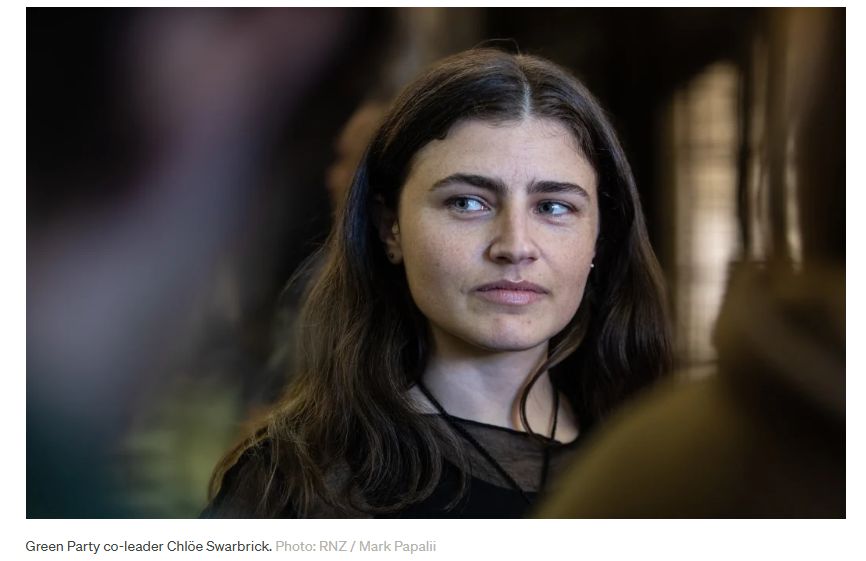
Green Party co-leader Chlöe Swarbrick said the goverment was using its "dying breaths" to remove New Zealanders' right to hold emitters accountable.
"They've spent two and a half years taking a wrecking ball to climate laws and, at the eleventh hour, they're now ripping away New Zealanders' and the courts' ability to do what this government lacks the spine to do."
The minister's claims that common law could cut across the government's climate change framework made no sense, she said.
"The Climate Change Response Act and the ETS do not deal with this issue at all - there is no framework or mechanism for any type of compensation for climate related harm."
Instead, the change "appears to be cutting off the only potential mechanism we have at the moment before we are anywhere near having legislation that would address these issues."
The law change would not alter the government's responsibilities under the Act, and businesses that had obligations under the ETS would still be required to meet them, Goldsmith said.
Another landmark climate case, taken against Climate Change Minister Simon Watts over the government's plan to tackle climate change, is also unaffected.
That case was heard in March and a reserved decision is expected later this year.
The case against Watts was taken jointly by the Environmental Law Initiative (ELI) and Lawyers for Climate Action.
ELI senior legal adviser Eliza Prestidge Oldfield took issue with Goldsmith's justification that climate change should be dealt with through national policy rather than the courts.
There were serious deficiencies in the government's climate policies, assumptions, and decision-making, which the initiative's court case had highlighted, she said.
"It's a bit rich for the government to say climate is best dealt with as a national policy issue when they're busy scrapping climate action."
RNZ
New Zealand's public broadcaster, providing comprehensive NZ news and current affairs, specialist audio features and documentaries.
Radio New Zealand is a Crown entity established under the Radio New Zealand Act 1995. Radio New Zealand News are vital elements in our programming, providing impartial news and information to New Zealanders every day. Radio New Zealand (RNZ) provides listeners with exciting and independent radio programmes in accordance with the Radio New Zealand Charter.
 Gordon Campbell: On How US Courts Are Helping Donald Trump Steal The Mid-Terms
 Forest And Bird: Government Biodiversity Credit Scheme Welcomed As Opportunity For Restoration
 Office of the Ombudsman: Ombudsman Publishes Findings On Ministry Of Education Sensitive Claims Scheme
 Nelson City Council: Mayor Welcomes Auditor-General Decision Not To Prosecute Councillor
 Johnnie Freeland: Ko Tātou Tātou - Climate Action In Aotearoa Begins With Relationship
 Zero Waste Network Aotearoa: Container Return Scheme Bill Would Double Recycling Rates And Put Money Back In Households
 Wellington City Council: Statement From The Wellington Mayoral Forum On Options For Regional Governance Reform

