
 Scoop has an Ethical Paywall


ACT Calls Committee Report Recommending Social Media Age Restrictions 'Predetermined'

Lillian Hanly, Political reporter
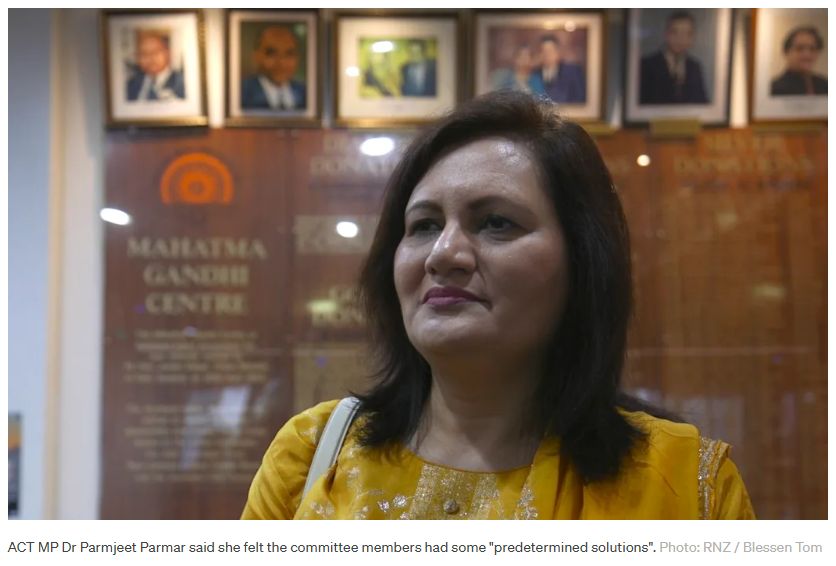
The ACT party believes the outcome of an inquiry it initiated was "predetermined", after a select committee recommended introducing age restrictions for social media platforms.
It gave a "differing opinion" on most of the recommendations made, saying they fail to "clearly define the harm they are trying to address" and "risk undermining privacy and free expression".
The Education and Workforce Committee inquiry into the harm social media causes for young people online showed the harm was significant, fast-moving and occurring on a global scale.
The list of recommendations to the government and private sector also included establishing a national regulator and regulating deepfake technology.
The New Zealand government has explored options of a social media ban after Australia implemented one, with National keen to progress with one before the end of this term.
National MP Catherine Wedd submitted a member's bill to legislate a ban, while the education minister is doing separate work around regulation.
ACT opposed a ban, with MP Dr Parmjeet Parmar instead requesting an inquiry by Parliament's Education and Workforce Committee into social media harm.
Following the release of the report Parmar said the committee was supposed to explore "properly" how social media could be regulated.
She said she felt the committee members had some "predetermined solutions", and jumped to those rather than doing the work properly.
Parmar used the social media ban for under-16s as an example, "the whole thing was centred around that," but she said the advisers didn't provide advice on the issue.
"The reason that was given was that minister Erica Stanford, is doing some work in that regard, so they didn't want to provide advice to the select committee.
"That really undermined the role of the Select Committee as well, because select committee should have done this work independently of government, and that's where I'm really disappointed that we didn't seek that advice."
There was a material gap in the evidence heard and advice received, and the majority of the select committee jumped to recommend a social media ban for under 16 year olds, she said.
Parmar was also critical of the recommendation of regulating or banning certain apps, asking "how do you define 'nudify' apps?"
"That's the question here, and that was unexplored properly."
Behaviour should be regulated, rather than technology, she said.
"We don't want to ban technology, we want to actually regulate the behaviour, because technology will keep evolving."
The select committee report
National's Committee Lead on the Inquiry Carl Bates said the report made clear that "the harm young New Zealanders are facing from online platforms is significant. It is fast-moving and occurring on a global scale".
He said New Zealand should be a "fast-follower" in this space as opposed to a "first mover", both lagging behind other countries and trying to be unique in the approach could result in "less effective outcomes for our young people."
"This is a step towards important, timely action," he said.
Labour backed the report, saying it confirmed the party's long held view that keeping young people safe online required more than simply setting an age limit.
Labour's technology and innovation spokesperson Reuben Davidson said the report meant there was a better chance now to "educate and empower parents, caregivers and young people about dangers online."
"My Members' Bill on Online Safety reflects the report's direction. It would put three clear legal duties on online service providers to ensure their platforms are safer," Davidson said.
New Zealand needed an independent regulator to make sure online platforms were safe, and to ensure social media companies could be held responsible for the harm they cause, he said.
"We also need clear rules to control deepfake technology and a ban on "nudify" apps, which pose real risks to young people's privacy and safety."
He also said he was pleased to work constructively with National throughout the inquiry.
The recommendations would now be considered by Stanford.
What the committee heard:
- Current laws are not fit for purpose
- Online harm is serious and widespread
- Harm can affect mental health, wellbeing, and development
- Deepfake technology can be misused to create fake sexual images that cause serious harm
- Algorithms can push harmful or extreme content
- The design of online platforms can cause or exacerbate harms
- Young people are exposed to harmful advertising
- Parents want to help but lack clear support
What the committee recommended:
- Address legislative gaps
- Establish an independent national regulator for online safety
- Review platforms' liability for harm resulting from the content they host and the platform design
- Introduce age restrictions for social media platforms
- Ban "nudify" apps and prohibit the creation and distribution of nonconsensual deepfake sexual imagery
- Regulate deepfake technology
- Consider regulating algorithmic recommendation systems
- Explore mandating algorithm transparency
- Promote New Zealand-based research
- Prevent online advertising of alcohol, tobacco, and gambling for under 18s
- Educate and empower parents, caregivers, and young people
In terms of the recommendation to introduce age restrictions the report stated the majority of the committee considered the intervention "proportionate to the serious nature of the harm it would mitigate."
It noted it did not have information on the government's proposed approach so could not indicate the cost-effectiveness and financial implications of the intervention.
It also said the intervention was "highly intrusive" compared to the current absence of restrictions, but "most of us believe that the nature of the harms we have heard about - through evidence, anecdote, lived experience, and advice - warrants such intrusion."
It could be implemented very quickly, and the committee hoped to see it in effect within the next 12 months.
"Most of us strongly support this intervention and wish to see it implemented as soon as practicable. We urge the government to commit to this as the most useful immediate solution to prevent further harm."
The Green party also submitted a "differing view" regarding the age restrictions, because it did not believe that would address the concerns identified.
It said young people had told them they would find a way around the rules.
"Effective age restriction requires all users to provide personal identification to social media platforms, that already cannot be trusted to protect user information.
"We are sceptical that age restriction technology that does not infringe on the privacy of all users and is effective at preventing minors from accessing social media platforms exists.
"We are also concerned that age restrictions could drive youth from regulated platforms to other fringe, unregulated, and harmful platforms, undermining the purpose of age restrictions."
RNZ
New Zealand's public broadcaster, providing comprehensive NZ news and current affairs, specialist audio features and documentaries.
Radio New Zealand is a Crown entity established under the Radio New Zealand Act 1995. Radio New Zealand News are vital elements in our programming, providing impartial news and information to New Zealanders every day. Radio New Zealand (RNZ) provides listeners with exciting and independent radio programmes in accordance with the Radio New Zealand Charter.
 Gordon Campbell: On Children’s Book Classics - The Moomins
 Nelson City Council: Mayor Welcomes Auditor-General Decision Not To Prosecute Councillor
 Johnnie Freeland: Ko Tātou Tātou - Climate Action In Aotearoa Begins With Relationship
 Zero Waste Network Aotearoa: Container Return Scheme Bill Would Double Recycling Rates And Put Money Back In Households
 Wellington City Council: Statement From The Wellington Mayoral Forum On Options For Regional Governance Reform
 MUNZ: TAIC Report On Kaitaki Incident Gives Shocking Picture Of Decline Of NZ Maritime Infrastructure
 Greenpeace: New Climate Report Yet More Reason To Reduce Dairy Herd

