
 Scoop has an Ethical Paywall


David Vs The Media: Has Seymour Gone Too Far?

Lauren Crimp, Political Reporter
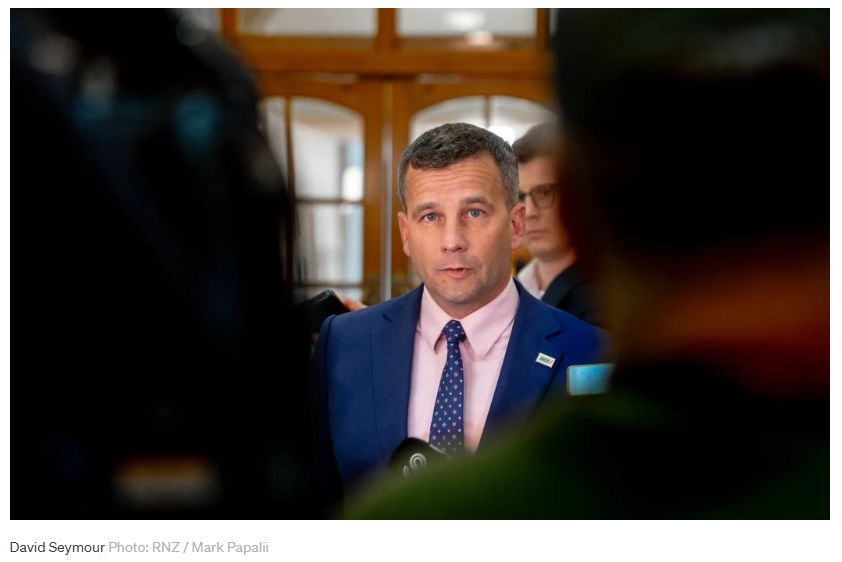
A law professor and a media expert say David Seymour has gone too far in public attacks against RNZ and TVNZ.
They've warned jabs at the media will continue as the election draws closer, and could erode public trust.
The deputy Prime Minister and ACT party leader spoke to The Platform last week, taking swings at both state broadcasters' management.
He criticised the appointment of RNZ's Morning Report host John Campbell and suggested RNZ's chief executive Paul Thompson could lose his job, adding "it's really critical that we are ensuring that we get better people on the board, and those people will change the management."
He also accused TVNZ of being "politically motivated".
Seymour is a shareholding minister in both RNZ and TVNZ, and the law says ministers cannot give direction to the state broadcasters.
Seymour told RNZ he had not done that.
"Decisions around staffing, presenter line-ups, and editorial matters are for boards and management. Anyone who thinks RNZ is taking editorial instructions from me clearly does not listen to RNZ."
He said editorial independence did not, however, mean "freedom from accountability", adding ministers are entitled to comment "when publicly owned media organisations are losing audience, relevance, or public confidence".
Media commentator and former New Zealand Herald editor Gavin Ellis said Seymour crossed the line, and while it may not have been explicit direction, it was against the spirit of the law.
"He is effectively telling Radio New Zealand who they should employ in an editorial role, and that is simply not for him to do," Ellis said.
"He should back off."
Seymour's comments came in the wake of a tumultuous couple of weeks for the relationship between the coalition government and the media.
Ellis warned there would be more to follow.
"The closer the call at the election, the more likely it is that we will see attempts to exert a chilling effect on media ... to get them to stay clear of the contentious stuff, because ... they're under pressure," he said.
He was confident the media would not bow to any pressure, but said it would not help with public trust.
AUT's annual media trust survey last month found 37 percent of respondents trust "most of the news, most of the time" - up from 32 percent last year.
It found RNZ was the country's most trusted news brand, followed by the Otago Daily Times and TVNZ.
"It's a very, very delicate situation, and it won't take very much to push that that trust level back down again, which is another reason why politicians should refrain from doing so," said Ellis.
"It is in nobody's interest to have low trust in media."
Otago University law professor Andrew Geddis said Seymour appeared to indicate he wanted to stack RNZ's board to his advantage, which was legally questionable and undermined his claims he wants to rebuild public trust in RNZ.
"It's very hard to see how the public can trust a public broadcaster when you have a politician saying, 'I'm putting my people in charge of it, to get the people and the presenters telling you the news that I want them to tell'," he said.
Geddis also suspected the coalition would continue its criticism of the media.
"There's a rule in politics, that when politicians start attacking the media, they know they're losing," he said.
"They know that they're going down in the polls, and they're trying to find someone to blame."
'Entirely inappropriate'
Labour's media spokesperson Reuben Davidson said Seymour's comments "were entirely inappropriate but not surprising, coming from a government that's become very anti media."
He added it was particularly concerning given the government planned to scrap the Broadcasting Standards Authority and not replace it with an independent regulator.
Green Party co-leader Chloe Swarbrick said Seymour's comments set a "deeply dangerous precedent" with a member of Cabinet challenging editorial independence.
"We just simply can't have ministers threatening our publicly funded news agencies because they don't like what is being said about them or what's being reported on," she said.
"This is a really problematic pattern of behaviour that's been exhibited by members of this government for not only the past few weeks, but the past few months and the past few years."
In response to Seymour's comments, RNZ's board chair Jim Mather defended its editorial independence and warned against political interference.
TVNZ said it did not have a view.
Media minister Paul Goldsmith said ministers cannot get involved in operational matters.
He said the government's role is to appoint the board and set expectations about financial sustainability, growing audience numbers and improving trust levels.
RNZ
New Zealand's public broadcaster, providing comprehensive NZ news and current affairs, specialist audio features and documentaries.
Radio New Zealand is a Crown entity established under the Radio New Zealand Act 1995. Radio New Zealand News are vital elements in our programming, providing impartial news and information to New Zealanders every day. Radio New Zealand (RNZ) provides listeners with exciting and independent radio programmes in accordance with the Radio New Zealand Charter.
 Gordon Campbell: On Children’s Book Classics - The Moomins
 Wellington City Council: Statement From The Wellington Mayoral Forum On Options For Regional Governance Reform
 MUNZ: TAIC Report On Kaitaki Incident Gives Shocking Picture Of Decline Of NZ Maritime Infrastructure
 Greenpeace: New Climate Report Yet More Reason To Reduce Dairy Herd
 Better Public Media: Opposing Plans To Scrap The BSA
 Internal Affairs: Citizenship Test For Citizenship By Grant Applicants From Late 2027
 Dayenu: Condemning Use Of Government Funding For Extremist Report On Antisemitism

