
 Scoop has an Ethical Paywall


Finance Minister Puts Money Where Her Mouth Is By Reducing Budget's Operating Allowance

Jo Moir, Political Editor
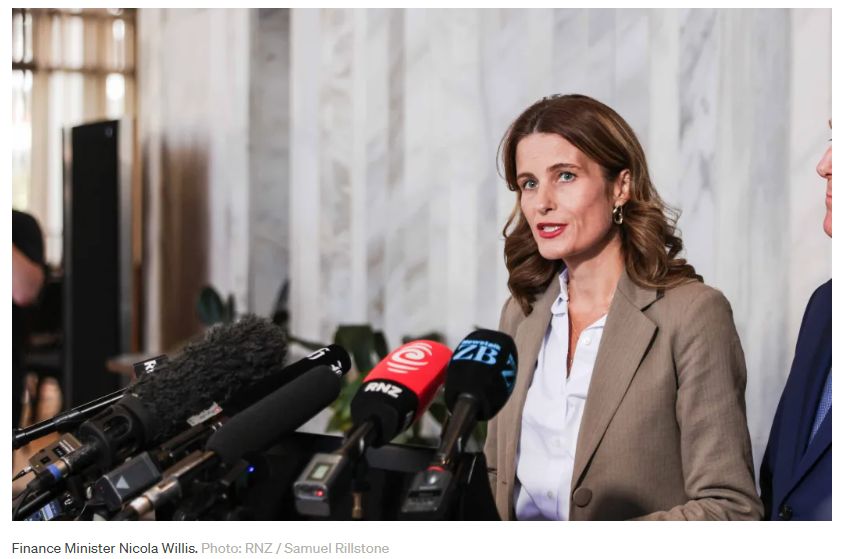
Analysis - Nicola Willis has put her money where her mouth is and reduced her Budget's operating allowance for a third year running.
For years, the Finance Minister has been relentless in her criticism of the previous minister, Grant Robertson, and his extensive operating allowances - $5.9 billion in 2022 and $4.8b in 2023 - promising to rein in spending and prioritise fiscal discipline.
In her first Budget in 2024 she told reporters in the lock-up that she was "weaning off the addiction to spending" that Robertson had created over six years of a Labour government.
At that year's Budget, an operating allowance of $3.5b had been forecast, which was ultimately reduced by $300 million to $3.2b.
Last year the slashing was even more aggressive when a forecast $2.4b allowance was chopped in half by her pre-Budget speech to just $1.3b - a reduction of $1.1b.
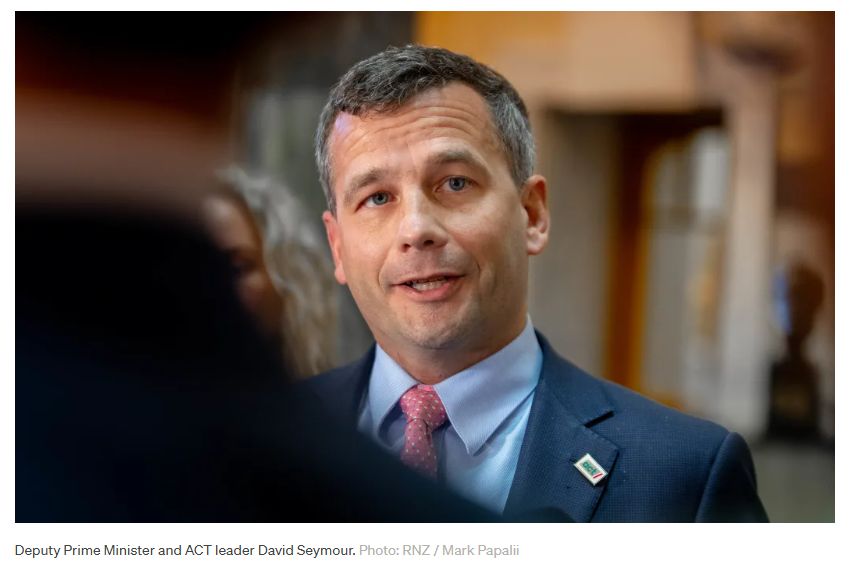
And on Wednesday the Prime Minister delivered the news for her, telling a Business NZ audience in Auckland that the forecast $2.4b allowance had been nudged down by $300m to $2.1b.
Those operating allowances are tight, but critics will find it difficult to describe them as austerity, especially with the likes of the Taxpayers' Union arguing the number should be closer to zero.
Singing from that same songsheet traditionally is the ACT Party. When leader David Seymour was asked at Parliament on Wednesday whether he would have liked the cuts to go further, he said his aim would have been a "less than zero" Budget.
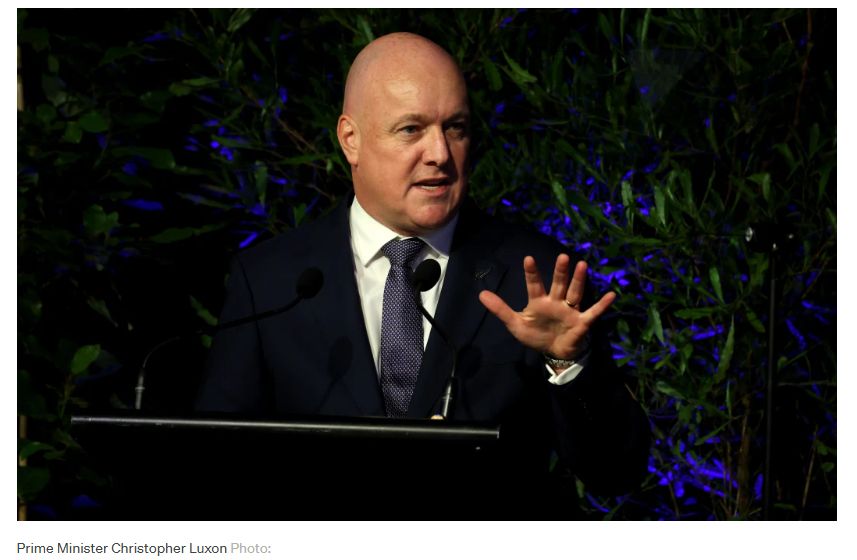
"Speaking as the ACT leader, yeah, I think we need to be a lot tougher on reducing the deficit and reducing government spending, but also speaking as the Deputy Prime Minister, I'm proud to be part of this government and I know that we wouldn't have made the level of savings we have [without ACT]."
Seymour said the savings had ACT's fingerprints all over them and his ministers were the ones at the Cabinet table putting pressure on the coalition to make "careful use of taxpayer money".
Willis told RNZ on Wednesday that if it weren't for the fuel crisis her operating allowance reduction would be larger and more in tune with the cuts seen last year.
"It is the case that without the fuel crisis, yes, we may have been able to have an even tighter allowance, but my view is that we have achieved a great deal by reducing our forecast operating allowance, ensuring that we're building up buffers for the future, keeping New Zealand financially secure."
The buffers are needed more than ever given the increasingly volatile world countries are operating in, where in the space of a few weeks a US-Israel attack on Iran can shoot petrol prices at the pump in New Zealand beyond $3 a litre.
That's required unexpected support packages that are already chewing up some of the operating allowance put aside for this year's Budget to the tune of hundreds of millions of dollars.
While the operating allowance restraint speaks direct to Willis' narrative over the past two-and-a-half years, this year's Budget is accommodating a $2.2b increase on what was forecast for capital expenditure - up from $3.5b to $5.7b.
Christopher Luxon addressed that increase, saying "the recent crisis has acted as a timely reminder that significant levels of capital investment will be required in the coming years".
But he also signalled it didn't reflect a "permanently higher rate of borrowing" and that in the years ahead a balance would be found between saving and borrowing.
Seymour also defended the increased capital spend saying it was to deal with "things that are yet to be announced, that I think are significant and timely investment", adding that in later years in the fiscal cycle the capital expenditure would reduce.
While Budgets are drastically impacted by global and national events and disasters - think the Christchurch earthquakes, the Covid-19 pandemic, or the ongoing fuel crisis - they're also shaped by individual government's political decisions.
Willis will be commended by many for slashing the operating allowances at each of her Budgets to date, but remains open to criticism from other quarters about both what the coalition cut and continues to prioritise spending on.
RNZ
New Zealand's public broadcaster, providing comprehensive NZ news and current affairs, specialist audio features and documentaries.
Radio New Zealand is a Crown entity established under the Radio New Zealand Act 1995. Radio New Zealand News are vital elements in our programming, providing impartial news and information to New Zealanders every day. Radio New Zealand (RNZ) provides listeners with exciting and independent radio programmes in accordance with the Radio New Zealand Charter.
 Gordon Campbell: On Pauline Hanson’s Rise, And The TOP Renaissance
 Hapai Te Hauora: New Online Gambling Laws Could Grow Harm While Claiming To Reduce It
 New Zealand Alliance Party: Alliance Party Firmly Opposes “Backdoor Privatisation” Of Kiwibank
 Taxpayers' Union: New Poll - Coalition Still Ahead; Luxon Regains 'Preferred Prime Minister' Top-Spot
 NZ National Party: Judith Collins’ Valedictory Speech
 Forest And Bird: Government Biodiversity Credit Scheme Welcomed As Opportunity For Restoration
 Office of the Ombudsman: Ombudsman Publishes Findings On Ministry Of Education Sensitive Claims Scheme

