
 Scoop has an Ethical Paywall


Engineering In Motion At Wintec
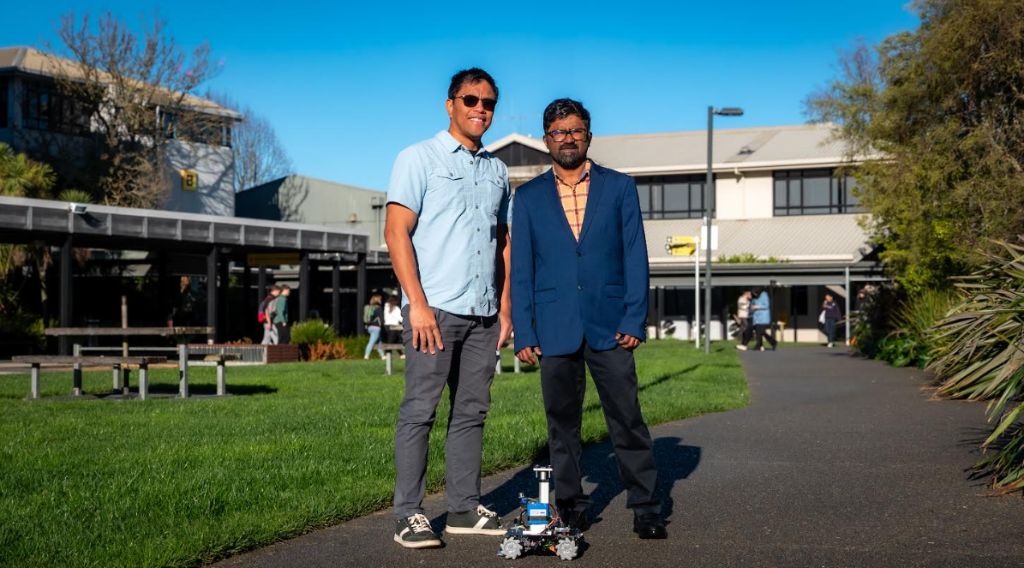
Third-year Wintec electrical engineering student Ronald Adecir is helping to tackle real-world logistical tasks using robotics as part of his engineering development project.
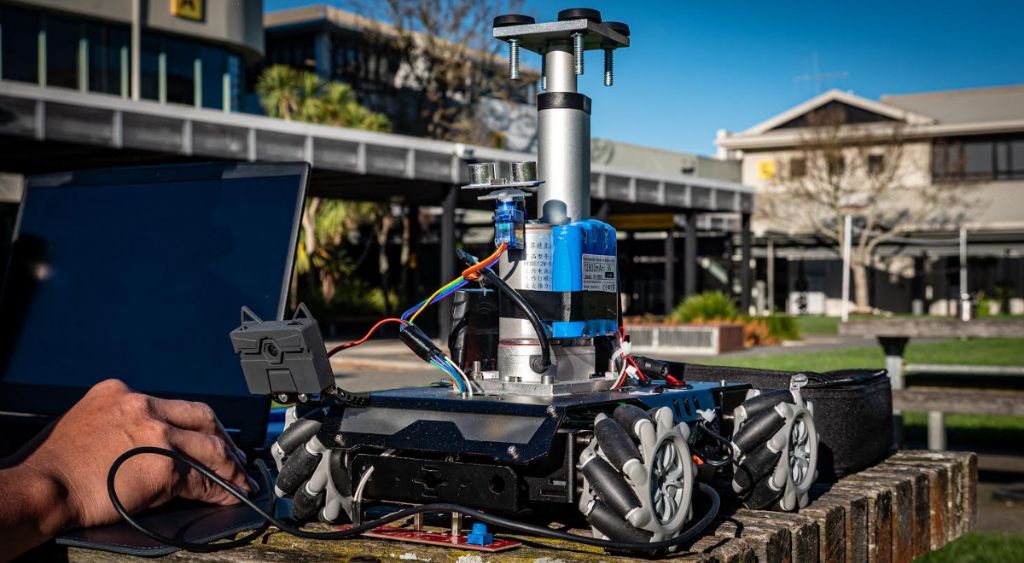
Currently in the final year of his Bachelor of Engineering Technology – Electrical, Ronald recently designed and created an autonomous guided transport vehicle (AGTV) capable of transporting up to 20kgs of equipment, food, and medical supplies.
He completed the project with assistance from his project supervisor, Wintec Academic Staff Member Dr. Srinivasan Govindan.
“The robot demonstrates an ability to autonomously transport equipment in environments such as manufacturing or healthcare,” said Ronald.
“It can also be equipped with a holder to deliver items like food or medicine to hospital patients.
“When further developed, it could help reallocate human labour towards more skilled and creative roles by automating repetitive, heavy, or monotonous tasks.”
By assisting workers, Ronald believes the AGTV could help to ease workforce pressures, particularly in the healthcare industry.
The vehicle can handle routine tasks, allowing staff to focus on critical, human-centred care that only they can provide.
While initially designed for material handling tasks in manufacturing and healthcare environments, the value of the robot is not limited to these industries.
Ronald’s inspiration for the project came from Srinivasan’s research in biomedical applications of robotics.
“I was inspired by his [Srinivasan’s] robotics presentation a year prior, which motivated me to collaborate with him,” said Ronald.
“He helped me secure funding, provided access to valuable research materials, and offered guidance throughout the project.”
Ronald said he found the project to be an “immensely rewarding” experience, crediting Wintec’s supportive environment.
“Wintec has provided a rich and supportive learning environment.
“We have access to a wide range of learning resources, dedicated and approachable academic staff, and encouragement from faculty leaders to explore creativity and innovation through student research.”
Packed with technology, the AGTV features multiple control modes, including manual remote control and autonomous facial, line, and object tracking.
An AI vision camera and sensor system guides it autonomously, and a PlayStation controller or mobile application provides manual control.
The battery-powered prototype is suited to flat surfaces, such as those commonly found in manufacturing floors, laboratories, and hospitals, where its infrared sensors can detect and follow a line to set locations marked with AprilTags, similar to QR codes, which its AI camera can identify.
Special tireless wheels allow the vehicle to move in any direction, including sideways, without needing to turn, and a lifting mechanism gives the ability to carry objects.
Ronald created the prototype using various engineering techniques and design principles he learned during his studies with Wintec.
About Wintec:
Wintec (Waikato Institute of Technology) is an institute of technology based in New Zealand's Waikato region. Wintec offers a wide range of degrees, diplomas and certificates. With a focus on practical, hands-on learning, Wintec is dedicated to equipping students with the skills and knowledge needed to succeed in their chosen careers.
Wintec is currently part of Te Pūkenga – New Zealand Institute of Skills and Technology, located in region 2 of the national network.
 Spark: New Report Sets Out Outcomes-Led Approach To Lift Rural Connectivity Using The Right Mix Of Technologies
 Bill Bennett: Fixed Voice Rules Head For Deregulation
 UN Department of Global Communications: United Nations Proposes New Global Dashboard To Measure Progress Beyond GDP
 Banking Ombudsman Scheme: Fraud Check Delays Well Worth The Inconvenience, Says Banking Ombudsman
 Asia Pacific AML: NZ’s Financial Crime Gap - Beyond The 'Number 8 Wire' Mentality
 Westpac New Zealand: Kiwi Households Adapting Despite Widespread Cost Pressure Concerns, Westpac Survey Shows


