
 Scoop has an Ethical Paywall


New Zealand Association Of Scientists Awards Celebrate The Achievements Of Scientists In A Difficult Year For Science
The New Zealand Association of Scientists (NZAS) is pleased to announce its annual medal winners for 2025. The NZAS medals have a long history and are among the most prestigious awarded across all fields of research in New Zealand.
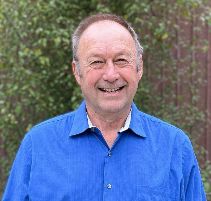
The Marsden Medal is awarded for a lifetime of outstanding service to the cause or profession of science, in recognition of service rendered to the cause or profession of science in the widest connotation of the phrase. This year’s Marsden Medal is awarded to Dr Tony Conner from the Bioeconomy Science Institute (tony.conner@agresearch.co.nz). Dr Conner has had a career of outstanding service to primary industry sciences in New Zealand, both as a leading scientist and a leader of science. Throughout his career in the former DSIR, then Crop & Food Research, Plant & Food Research and AgResearch, he focused his attention on the continuum between the fundamental and applied biological sciences, bridging the gap between research results and the transfer of technology to industry for outcomes that impact directly on the New Zealand economy. Tony was elected a Companion of the Royal Society of New Zealand in 2003, became a Fellow of the New Zealand Institute of Agricultural & Horticultural Science in 2010, and was elected a Fellow of the Royal Society of New Zealand in 2011.
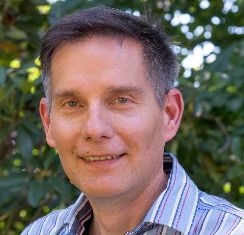
The Shorland Medal is awarded in recognition of major and continued contribution to basic or applied research that has added significantly to scientific understanding or resulted in significant benefits to society. The 2025 Shorland Medal is awarded to Distinguished Professor Philip Hulme from the Bioprotection Aotearoa CoRE at Lincoln University (philip.hulme@lincoln.ac.nz). He is recognised worldwide for scientific achievements that have significantly progressed global understanding of the causes and consequences of biological invasions, issues critical to the economic and environmental wellbeing of New Zealand. His extraordinarily high citation statistics have led him to be ranked as a Highly-Cited Researcher in each of the last 11 years placing him consistently in the top 0.1% of scientists worldwide.
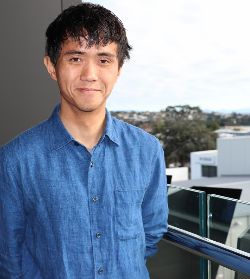
The Hill Tinsley Medal is awarded for outstanding fundamental or applied research in the physical, natural or social sciences published by a scientist or scientists within 15 years of their PhD. The 2025 Beatrice Hill Tinsley Medal is awarded to Dr Terry Isson at the University of Waikato (tisson@waikato.ac.nz). Dr Isson leads New Zealand’s flagship research programme on enhanced weathering as a carbon dioxide removal strategy. His team is pioneering real-world carbon removal trials and advising government and industry on how to ensure durability of CO2 drawdown in Aotearoa and globally. He has earned recognition as a scientific leader, mentor, and communicator at the forefront of Earth system science.
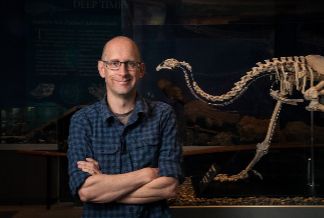
The Cranwell Medal is awarded to a practising scientist for excellence in communicating science to the general public in any area of science or technology. The 2025 Cranwell Medal has been awarded to Associate Professor Nic Rawlence from the University of Otago (nic.rawlence@otago.ac.nz). Professor Rawlence is Director of the Otago Palaeogenetics Laboratory at the University of Otago, where he uses ancient DNA and palaeontology to reconstruct prehistoric Aotearoa New Zealand, how it has changed, and how this information can be used for evidence-based kaitiakitanga and conservation management of taonga species. He is also one of New Zealand’s leading science communicators. Recent media surrounding de-extinction saw his accessible critical commentary appear in hundreds of media outlets worldwide.
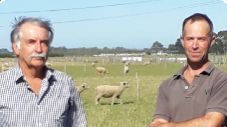 | 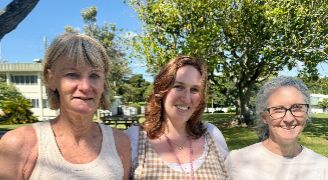 | 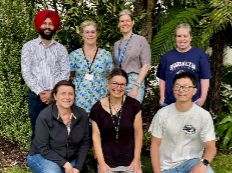 |
This year the Association is introducing a new award, the Scientific Workers Medal. The inaugural 2025 medal is awarded to the multidisciplinary technical team that supported the Endophyte Discovery Team at the Bioeconomy Science Institute (contact: nikki.webb@agresearch.co.nz). These technicians have assisted in the development of novel endophyte strains that improve pasture resilience, reduce pest damage, and support animal health, directly addressing the challenges of pasture persistence under New Zealand’s variable climate. Their specialist skills in endophyte isolation, culturing, and understanding chemical and biological effects have formed the backbone of the discovery pipeline. The team includes Nicola Webb (chemistry/toxicology), Anouck de Bonth (plant and microbial science), Joanne Jensen (entomology), Debbie Hudson (molecular biology), Russell Croy (animal safety testing), Won Hong (genomics), Leo Liu (chemistry), Yulia Morozova (chemistry), Jana Schmidt (plant genetics), Jaspreet Singh (molecular biology), Jan Sprosen (immuno-chemistry), Lee Sutherland (animal science), Zane Webber (germplasm collection), and Michelle Williamson (germplasm resources).
Dr Lucy Stewart, co-President of the Association, says that the Association is very pleased to introduce a new medal this year honouring the work of technicians and scientific workers, as well as the four medals historically awarded to individuals. “In very difficult times for the scientific community we feel it is important to recognise that much world-leading work cannot proceed without the efforts of teams of workers who rarely get the spotlight. We hope that this award leads to a broader understanding of the science system and the team nature of modern scientific effort.”
She adds “We are also, as always, pleased to highlight the efforts of individual researchers across a variety of fields. They make vital contributions to our country that go far beyond things which can be measured in dollar values or economic growth, and that is what we want to celebrate.”
The awards were presented in Wellington today at the annual NZAS conference to most recipients.
The full citations for the medals follow.
Hill Tinsley Medal
This year’s winner of the Hill Tinsley Medal is Dr Terry Isson, a geochemist whose research is transforming our understanding of how Earth regulates its long-term climate. His work has reshaped the global carbon-silica cycle, revealing that reverse weathering — a process once thought minor — plays a central role in buffering ocean pH, regulating atmospheric CO2, and influencing the stability of Earth’s climate system across mass extinctions and warm periods. Since 2018, Dr Isson has published extensively in leading journals, including Nature, Science, and PNAS, combining geochemical data, climate modeling, and sediment archives to show that the location and intensity of clay formation has shifted over Earth’s history, with profound consequences for climate regulation. He also leads New Zealand’s flagship research programme on enhanced weathering as a carbon dioxide removal strategy. His team is pioneering real-world carbon removal trials and advising government and industry on how to ensure durability of CO2 drawdown in Aotearoa and globally. Dr Isson’s research has not only revived global interest in reverse weathering but also connected deep-time climate feedbacks with modern climate solutions — earning recognition as a scientific leader, mentor, and communicator at the forefront of Earth system science.
Cranwell Medal
Associate Professor Nic Rawlence is the 2025 winner of the Cranwell Medal. He is Director of the Otago Palaeogenetics Laboratory at the University of Otago, where he uses ancient DNA and palaeontology to reconstruct prehistoric Aotearoa New Zealand, how it has changed, and how this information can be used for evidence-based kaitiakitanga and conservation management of taonga species. Nic is also one of New Zealand’s leading science communicators. His articles regularly appear in The Conversation and on his Lost Worlds Vanished Lives SciBlog, and are republished widely. He has given numerous interviews to national and international media, across all forms, about his lab’s research; has appeared in several international documentaries; regularly gives public talks and school visits; and most importantly, has spoken out widely about topical issues in science and conservation, even busting a few myths now and then. The recent media surrounding de-extinction saw his accessible critical commentary appear in hundreds of media outlets worldwide. Nic is also the tertiary representative of the Biology Educators of Aotearoa New Zealand, for whom he writes popular science articles for secondary school
students and upskills teachers in the latest biological science. His skills are regularly called upon to train the next generation of passionate science communicators.
Shorland Medal
Distinguished Professor Philip Hulme, the Deputy Director of the Bioprotection Aotearoa CoRE at Lincoln University, is the 2025 winner of the Shorland medal. He is recognised worldwide for scientific achievements that have significantly progressed global understanding of the causes and consequences of biological invasions, issues critical to the economic and environmental wellbeing of New Zealand. He has had a tremendous impact on the way biosecurity is perceived and implemented internationally, particularly in his assessment of the driving forces of invasions, application of risk assessments, and quantification of environmental impacts. His biosecurity expertise is highly sought-after by the international community, as evidenced by his lead role in the United Nations Intergovernmental Science-Policy Platform on Biodiversity and Ecosystem Services and numerous EU funded programmes. His extraordinarily high citation statistics have led him to be ranked as a Highly-Cited Researcher in each of the last 11 years placing him consistently in the top 0.1% of scientists worldwide. He has received numerous accolades for his research including the inaugural Lincoln University Global Science Medal, the Royal Society Te Apārangi Hutton Medal, the New Zealand Ecological Society Award for Ecological Excellence, a Miegunyah Distinguished Visiting Fellowship at Melbourne University, as well being elected a Fellow of the Royal Society Te Apārangi in 2013.
Marsden Medal
Dr Tony Conner from the New Zealand Institute for Bioeconomy Science is the 2025 winner of the Marsden Medal. He has contributed a career of outstanding service to primary industry sciences in New Zealand, both as a leading scientist and a leader of science. Throughout his career in the former DSIR, then Plant & Food Research and AgResearch, he focused his attention on the continuum between the fundamental and applied biological sciences, especially the adoption of biotechnology, genetics and genomics. This involved bridging the gap between research results and the transfer of technology to industry for outcomes that impact directly on the New Zealand economy. While much of his own research focused on potatoes, he has worked on a wide range of vegetable, arable, flower and forage species. Tony’s breadth of knowledge across biological sciences propelled him into the global public debate on biotechnology and genetic modification. In this capacity he made a significant contribution to global containment and biosafety assessments of genetically modified crops. For the last decade Tony moved into science management and migrated to leading science rather than being a leading scientist. This involved leading the strategy, infrastructure, capability, and delivery of the research and technology transfer to industry within the Forage Science Group of AgResearch. In this role he championed the redirection and revitalisation of science eorts in forage science for New Zealand’s pastoral sector. Tony was elected a Companion of the Royal Society of New Zealand in 2003, became a Fellow of the New Zealand Institute of Agricultural & Horticultural Science in 2010, and was elected a Fellow of the Royal Society of New Zealand in 2011.
Scientific Workers Medal
The inaugural Scientific Workers Medal is awarded to the multidisciplinary technical team that supported the Endophyte Discovery Team at the New Zealand Institute for Bioeconomy Science. These technicians have assisted in the development of novel endophyte strains that improve pasture resilience, reduce pest damage, and support animal health, directly addressing the challenges of pasture persistence under New Zealand’s variable climate. Their specialist skills in endophyte isolation, culturing, and understanding chemical and biological effects have formed the backbone of the discovery pipeline. Their meticulous work has ensured the delivery of safe, effective endophyte-grass associations tailored to New Zealand farming systems. Technicians have conducted rigorous field trials across diverse environments, generating critical data that have guided industry confidence in adopting these innovations. Their precision in seed processing and inoculation has enabled high-quality endophyte-infected seed to reach New Zealand farmers, reducing reliance on chemical pesticides and supporting sustainable, productive grazing systems. This work has resulted in increased pasture longevity, reduced environmental impacts, and improved farm profitability nationwide. Their contributions have directly supported industry partnerships and farmer confidence in adopting these technologies, reducing pesticide use and improving livestock systems. This multidisciplinary research program highlights how the expertise and commitment of technicians are essential to delivering impactful, science-based solutions that support sustainable and resilient pastoral agriculture in New Zealand. The team includes Nicola Webb (chemistry/toxicology), Anouck de Bonth (plant and microbial science), Joanne Jensen (entomology), Debbie Hudson (molecular biology), Russell Croy (animal safety testing), Won Hong (genomics), Leo Liu (chemistry), Yulia Morozova (chemistry), Jana Schmidt (plant genetics), Jaspreet Singh (molecular biology), Jan Sprosen (immuno-chemistry), Lee Sutherland (animal science), Zane Webber (germplasm collection), and Michelle Williamson (germplasm resources).
 Bill Bennett: Fixed Voice Rules Head For Deregulation
 UN Department of Global Communications: United Nations Proposes New Global Dashboard To Measure Progress Beyond GDP
 Banking Ombudsman Scheme: Fraud Check Delays Well Worth The Inconvenience, Says Banking Ombudsman
 Asia Pacific AML: NZ’s Financial Crime Gap - Beyond The 'Number 8 Wire' Mentality
 Westpac New Zealand: Kiwi Households Adapting Despite Widespread Cost Pressure Concerns, Westpac Survey Shows
 University of Auckland: Kids’ Screen Use Linked To Long-Term Deficits In Self-Control And Attention


