
 Scoop has an Ethical Paywall


Conference Topic Spotlight: Restoring Our Oceans And Fisheries

Aotearoa New Zealand’s oceans are warming faster than elsewhere on the planet. This is additionally stressing marine life already suffering from harvesting pressures, trawling and dredging damage, and sedimentation. Our inshore marine areas are particularly under fire, as more frequent and extreme weather events drive large plumes of sediment into coastal waters, and overharvesting destabilises food webs with loss of underwater forests. We are seeing the impacts directly in undernourished milky-fleshed snapper, starving penguins and seabirds unable to feed their chicks.
The Marine Reserves Act needs a speedy revamp so we can make faster progress with marine protection. It took over a decade to secure marine protection in the Hauraki Gulf after it was first proposed by the Sea Change collaborative process. That is simply too long. We need legislation that provides a speedy process and a greater range of spatial protection tools, including customary management approaches. Legislative reform has been in process for over two decades. Will the next government bring it to fruition?
The restoration of our underwater forests should also be high on the political agenda. To help address kina barrens, rock lobster harvesting is now banned in the inner Hauraki Gulf and along the north-east coast of the North Island. That is positive, but we need to expand these closures to other areas suffering loss of kelp forests, including the outer Hauraki Gulf and the Marlborough Sounds. Funding for active restoration of these areas also needs to be made available to help them bounce back.
Session 8: Restoring our oceans &
fisheries
Thursday 25 June 2026,
8.30am
This session will focus on exploring current
and evolving approaches for marine restoration and
identifying what government policies are required to better
support them.
Chair: Andrew Grant, CEO, NEXT Foundation
International keynote: Reviving
Tasmania’s lost giant kelp forests
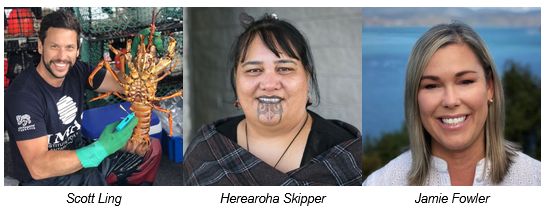
Scott
Ling, ARC Future Fellow in Reef Ecology, University of
Tasmania
What we have lost in our seas and
why it matters
Steve Hathaway, Underwater
Cameraman and Marine Educator
Rāhui for
ecosystem restoration and healing
Herearoha
Skipper, Chair, Ngāti Pāoa Iwi Trust
Te
Puna Ora o Te Moananui a Kiwa and a new legal framework for
expanding marine protection in Aotearoa
Jamie
Fowler, Conservation Impact Manager, WWF-New
Zealand
Speaker panel: What policies should the next government adopt to support marine recovery and restoration?
Bottom trawling, in particular, has been highlighted by those concerned with ocean health due to the negative environmental impacts of repeatedly dragging heavy gear through the seabed and over seamounts. Jono Ridler’s heroic unaided swim from North Cape to Wellington, with a clear call to end bottom trawling, has brought this issue into mainstream public consciousness. His swim is accompanied by a petition which already has over 80,000 signatures.
Ending bottom trawling is a challenge as almost 70 per cent of our commercial catch is harvested this way. It will require the development of new fishing gear that can effectively and efficiently harvest while avoiding seabed contact. The breakfast session explores innovations in fishing gear we can build on including the Canadian Katchi net and the Westport Lareco trawl. While such new methods are being rolled out across the country’s fishing fleet, we need to freeze the current bottom-trawling footprint and protect ecologically sensitive areas such as seamounts. Politicians are stalling progress on this, so how can we push forward anyway?
Session 7:
Breakfast session
Thursday 25 June 2026,
7.30am
This session will explore how smart engineering
and innovative technologies can address the environmental
impacts of bottom trawling.
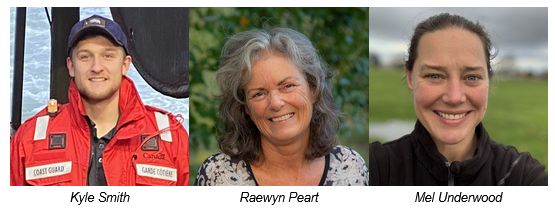
Chair: Raewyn Peart, Policy Director, EDS
Revolutionising fishing with
innovative technologies
Kyle Smith, CEO,
Katchi Technologies, Halifax
(livestream)
Protection of spawn habitat
and activity
Larry Wixon, Deep Sea
Skipper
Fish behaviour and trawl gear
innovation: Lessons from overseas and
Aotearoa
Mel Underwood, Fisheries Scientist,
Earth Sciences NZ
Environmental Defence Society
EDS speaks for the environment. It has influence.
Since 1971, EDS has been driving environmental protection in Aotearoa New Zealand
through law and policy change. That's why it's one of this country's most influential non-
profit organisations when it comes to achieving better environmental outcomes.
EDS has expertise in key disciplines including law, planning, landscape and science. It
operates as a policy think-tank, a litigation advocate, and a collaborator – bringing together
the private and public sectors for constructive engagement.
EDS runs conferences and seminars on topical issues, including an annual Environmental
Summit and the Climate Change and Business Conference.
EDS is a registered charity and donations to it are tax-deductible.
 Banking Ombudsman Scheme: Fraud Check Delays Well Worth The Inconvenience, Says Banking Ombudsman
 Asia Pacific AML: NZ’s Financial Crime Gap - Beyond The 'Number 8 Wire' Mentality
 Westpac New Zealand: Kiwi Households Adapting Despite Widespread Cost Pressure Concerns, Westpac Survey Shows
 University of Auckland: Kids’ Screen Use Linked To Long-Term Deficits In Self-Control And Attention
 University of Auckland: Research To Address Equity In STEM For Māori, Pacific And Female Students
 Stats NZ: Economic Impacts On New Zealand From Conflict In The Middle East – Report


