
 Scoop has an Ethical Paywall


Up To 1,300 Microplastic Particles Per Square Metre Per Day – Global Study On Microplastic Air Pollution
An international study led by the Eurofins Environment Testing microplastics peer group uncovers the extent of microplastic contamination in the air across three continents.
September 15th 2025
A groundbreaking global study led by a team of experts from several Eurofins Environment Testing laboratories across the world has revealed alarming levels of microplastic pollution with deposition rates reaching up to 1,300 microplastic particles per square metre per day in some urban areas.
The PlasticDustCloud project, one of the most geographically comprehensive and methodologically harmonised investigations of its kind, analysed samples taken from 12 sites in nine different countries across three continents. Its findings highlight the pervasive presence of microplastics in the air we breathe.
Why does it matter?
Microplastics are plastic particles smaller than 5 millimetres. They are increasingly found not only in oceans and soil, but also in the air we breathe. Microplastics released in the air in urban environments can be transported by wind and air currents, and, as a result, be found in remote locations far from urban sources. Recent studies have highlighted the presence of microplastics in human lungs, blood, and even breast milk. These particles can carry hazardous chemicals and potentially pose a threat to human health and the environment, making their presence in the air a growing concern.
Research, results and methodology
Sampling was conducted from July to August 2024 through a harmonised wet-dry deposition method using funnels with glass bottles. Sample collection was conducted in parallel during a week-long exposure period in diverse urban environments including Melbourne (AU), Budapest (HU), Bergen (NO), Gijón (ES), Rovaniemi (FI), Aabybro (DK), Barneveld (NL), Northampton (UK), Sacramento and South Bend (USA). Rural reference sites in Pelkosenniemi (FI) and Alta (NO) were also included for comparison.
Samples were filtered, prepared, and analysed at various Eurofins Environment Testing state-of-the-art microplastic testing laboratories using a suite of complementary detection technologies, including vibrational spectroscopy (FTIR, LDIR, Raman) and thermoanalytical methods (Pyrolysis-GC/MS, TED-GC/MS). Stringent QA/QC protocols were applied throughout the entire process.
Results revealed varying deposition rates depending on site and detection technology, ranging from 1,250 particles per square metre per day (with a median value of 143 particles per square metre per day) to 3,110 µg per square metre per day (with a median value of 19 µg per square metre per day), using vibrational spectroscopy and thermoanalytical technologies respectively. The most frequently identified polymers were polyethylene (PE) and polypropylene (PP), reflecting global plastic production trends. In addition to plastics, tire wear particles (rubbers) were identified, with levels reaching up to 304 µg per square metre per day (median value of 2.4 µg per square metre per day), highlighting road traffic as an additional significant source of microplastics. Most particles identified via vibrational spectroscopy were smaller than 100 µm which is in the breathable fraction. Results demonstrated notable variations in deposition rates between adjacent sample collection points which were analysed by the same detection technology, highlighting the heterogeneity of microplastics in air, and underscoring the complexity of accurately measuring airborne microplastics.
This research adds critical data to a growing body of evidence highlighting how microplastic pollution is not just a marine or terrestrial issue, but also a global air quality concern that demands internationally coordinated action.
Key findings:
- Deposition rates: up to 1,300 particles/m² per day (spectroscopy) and 3.1 mg/m² per day (spectrometry), depending on site and detection technology.
- Polymer composition: polymer types varied depending on location, with PE and PP being the most prevalent.
- Size: the majority of particles analysed were less than 100 µm large, meaning they can be inhaled by humans.
- Analytical methods: no single analytical technique is universally applicable; method selection must align with specific research objectives.
- Global standardisation needed: this study underscores the urgent need for standardised global monitoring protocols for airborne microplastics.
Results in detail:
The results of the PlasticDustCloud project led by the Eurofins Microplastics Peer Group, including detailed site descriptions, sampling protocols, and further background materials, are available on the project’s website: plasticdustcloud.com
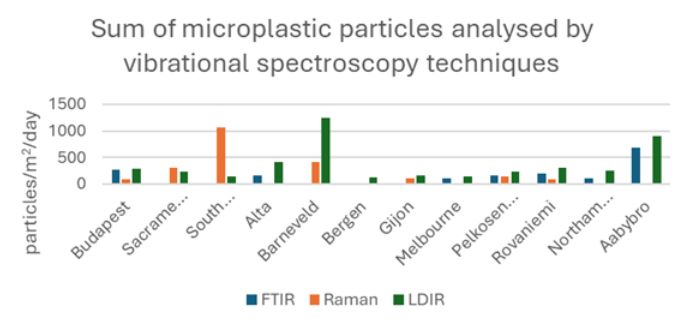
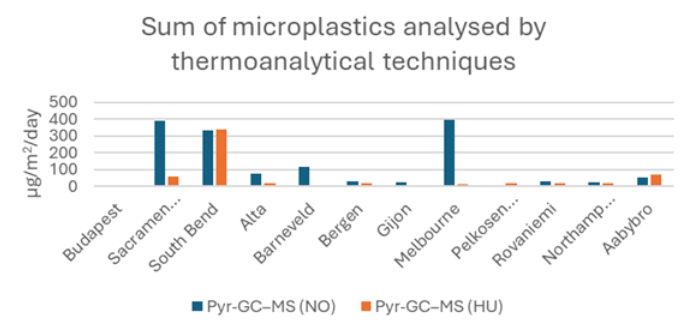
About the Eurofins Environment Testing network
The Eurofins Environment Testing network of laboratories contributes to a clean and safe environment by providing market-leading laboratory testing, monitoring and consulting services to a wide range of industrial companies, environmental consultants, contractors, retailers and government authorities.
For more information, please visit: https://www.eurofins.com/environment-testing/
 IPMSDL: Condemn The Killing Of Children, Bombing In Manipur, And Violent Repression Of People’s Protests
 Médecins Sans Frontières: Three Years On, Outbreaks Everywhere - MSF Urges Boost To Sudan’s Vaccination Programs
 UN News: Uncertainty Continues Over Safety In The Strait Of Hormuz
 Australian Museum: Celebrate Sir David Attenborough's 100th Birthday With The Australian Museum
 Clean Shipping Coalition: Shipping - IMO’s Net Zero Framework Progresses But ENGOs Slam Unnecessary Delay
 Gena Wolfrath, IMI: Understanding News Fatigue—and How To Stay Informed Without Overload