
 Scoop has an Ethical Paywall


Cook Islands Advances Culture-Based Education Reform Through Inclusive Co-Design Initiative
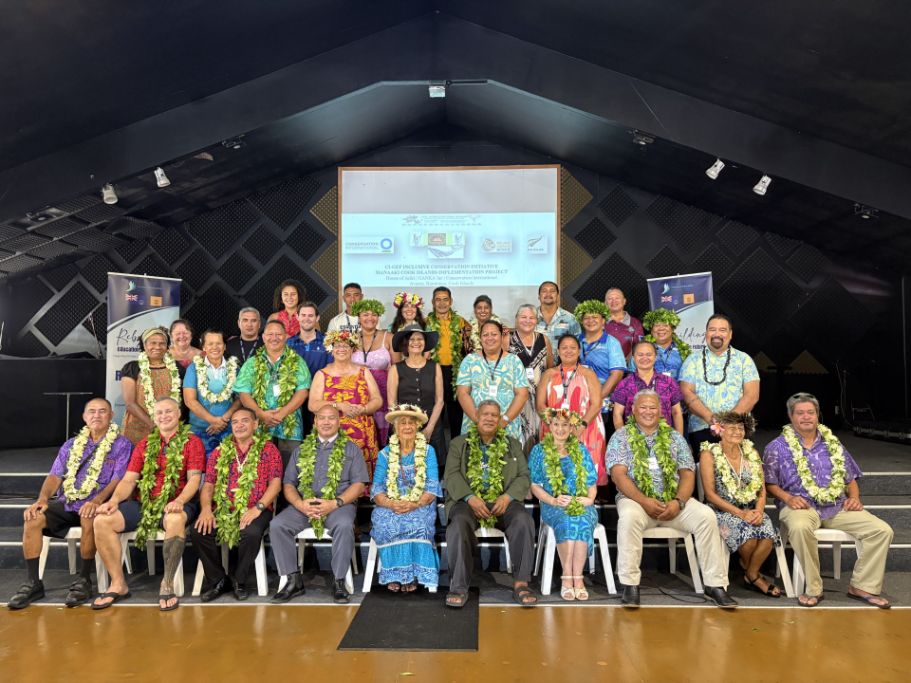
RAROTONGA, COOK ISLANDS (March 20, 2026) — This week, the Cook Islands took practical steps to deliver community-led, culturally grounded education reform. Traditional leaders and knowledge holders, alongside government, educators, communities, and partners, gathered to turn the E Kura Akataka-Pātoa (Kura Tapu) Manifesto into action.
Together participants co-designed culturally grounded education modules and a marine citizen science framework, now ready to roll out to three islands of Atiu, Mauke, and Mangaia, where these will be piloted. The pilots will provide small-scale trials of the initiative, so that these approaches can be tested and refined before potentially expanding to larger areas.
The initiative positions the Cook Islands as a regional leader in Indigenous-led education reform — demonstrating how traditional governance, cultural knowledge, and modern science can work together to prepare young people as guardians of their environment.'
Held in Rarotonga from 16–20 March, the five-day workshop focused on co-developing hands-on education modules rooted in local knowledge, alongside island-specific marine citizen science programmes to help communities monitor ocean health.
At the heart of this effort is Mana-Tapu— environmental guardianship as a core expression of Cook Islands identity and responsibility.
Tou Travel Ariki, Kaumaiti Nui of the House of Ariki said. “This is about taking our vision forward into action. Through the Kura Tapu Manifesto we are together shaping an education system that reflects our identity, our values, and our responsibility as guardians of our environment.”
The workshop builds on foundational work undertaken in 2025, when a preparatory workshop, led by the Ui Ariki and Aronga Mana produced the Kura Tapu Manifesto—the Ui Ariki’s shared vision for culturally grounded education reform. The process was shaped by the 2025 National Education Symposium, led by the Ministry of Education and the House of Ariki and further informed by Pa Enua field consultations across Mangaia, Atiu, and Mauke in February 2026.
The workshop marked a shift from vision to implementation—embedding traditional knowledge, language, and environmental stewardship into formal education, while equipping communities and schools across these islands with tools to actively monitor and manage their marine resources.
Vae Papatua, representing Secretary of Education Owen Lewis and the Ministry of Education, highlighted the current challenges faced by students today in the Cook Islands that does not prepare them for opportunities on their respective islands. “The current education system is preparing students to leave the islands, and this programme represents the needed opportunities that gives them skills and knowledge, so they are prepared to remain, earn and give back their knowledge to the community.” Papatua highlighted the need for education approaches grounded in cultural and island contexts.
Discussions throughout the workshop focused on shaping culturally grounded experiential learning approaches aligned with the Kura Tapu Manifesto, alongside the development of a community-informed marine citizen science approach. The focus was around five thematic modules that emerged from previous Pa Enua consultations, these were: (1) History of Voyaging & Navigation (Te Kaveinga), (2) Traditional Knowledge and Cultural Practices, (3) Sea Cupboard (marine resources), (4) Environmental Threats, and (5) Food Bank & the Makatea (land). Participants explored how these could connect with national curriculum priorities, while also identifying areas for teacher support and capacity building. Early thinking also considered how these activities could be taken forward across the Pa Enua pilot islands in the coming months, informed by community priorities and readiness.
The Marine Citizen Science Programme will combine traditional ecological knowledge with modern monitoring tools, supporting community-led ocean management while strengthening intergenerational learning. It will equip students and communities with practical monitoring tools — including underwater photogrammetry for reef health mapping, water sampling for environmental DNA analysis, and drop cameras for fish population surveys — while grounding these modern methods in traditional practices like Ra'ui (customary marine reserves) and the Arapo lunar calendar that has guided sustainable fishing for generations.'
“Globally, we see that conservation is most effective and sustainable when it is led by Local People and Communities, with their rights, knowledge, and governance systems fully integrated into environmental initiatives” said Leausalilo Schannel van Dijken, Senior Director of Marine and Heritage at Conservation International. “By grounding education and ocean stewardship in local knowledge, governance, and community leadership, the Cook Islands is developing a unique model that is both culturally anchored and built to last.”
The Co-Development Workshop was convened by the House of Ariki, through the Ui Ariki Ngateitei o te Kuki Airani (UANKA Inc.), in partnership with the Ministry of Education and Conservation International.
Puna Rakanui, Secretary general of UANKA Inc. acknowledged the ongoing and long-term commitment of Conservation International to support the aspirations of the House of Ariki. He also recognised the funding support from New Zealand Ministry of Foreign Affairs and Trade (MFAT) Manaaki Fund, and the Global Environment Facility’s Inclusive Conservation Initiative (GEF-7 ICI). He further noted: “Together, these partners highlight the regional and international recognition of the Cook Islands’ leadership and courage in reimagining its education system to better reflect cultural, spiritual, and environmental priorities.”
Outcomes from the workshop will directly inform the three island programmes to be rolled out across the Pa Enua pilot islands this year, with communities leading implementation in partnership with government and technical partners. Across these islands, teachers and community leaders will use the modules in schools, and the community will carry out citizen science, trialing the monitoring activities. Through these experiences, feedback will be gathered, and the modules and approaches will be refined and documented to prepare them for implementation.
Te Kaumaiti Nui, Tou Travel Ariki, expressed optimism for what lies ahead. He said he looks forward to continuing implementation on the Pa Enua pilot islands; Mauke, Mangaia and Atiu and wants the program developed and delivered to all the other islands, noting Mitiaro –his own island – “can be last.”
This effort highlights the Cook Islands’ leadership in advancing culturally grounded, Indigenous-led approaches to education and environmental management—linking identity, knowledge, and stewardship for future generations.
About Conservation International: Conservation International protects nature for the benefit of humanity. Through science, policy, fieldwork and finance, we spotlight and secure the most important places in nature for the climate, for biodiversity and for people. With offices in 30 countries and projects in more than 100 countries, Conservation International partners with governments, companies, civil society, Indigenous peoples and local communities to help people and nature thrive together.
 IPMSDL: Condemn The Killing Of Children, Bombing In Manipur, And Violent Repression Of People’s Protests
 Médecins Sans Frontières: Three Years On, Outbreaks Everywhere - MSF Urges Boost To Sudan’s Vaccination Programs
 UN News: Uncertainty Continues Over Safety In The Strait Of Hormuz
 Australian Museum: Celebrate Sir David Attenborough's 100th Birthday With The Australian Museum
 Clean Shipping Coalition: Shipping - IMO’s Net Zero Framework Progresses But ENGOs Slam Unnecessary Delay
 Gena Wolfrath, IMI: Understanding News Fatigue—and How To Stay Informed Without Overload