
 Scoop has an Ethical Paywall


Keeping our schools alcohol-free
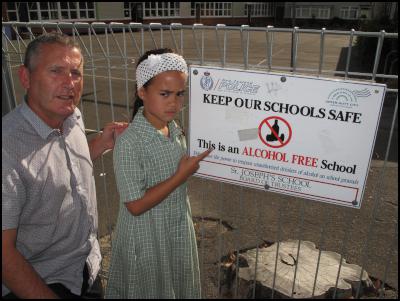
St. Joseph’s School principal Peter Adhern with year 2 student Ava Ekenasio. The school regularly clean up broken glass and empty cans from people who have been drinking alcohol outside the school.
FOR IMMEDIATE
RELEASE
Wednesday, 13 February
2013
Keeping our schools alcohol-free
UPPER HUTT, Wellington NZ, 12 February 2013 — Upper Hutt residents are reminded they play a crucial role in Upper Hutt's Alcohol-free Schools Scheme, which continues in 2013. Hutt Valley Police Area Commander Inspector Mike Hill says residents should call 111 if they see people consuming alcohol on school property, or behaving in an antisocial or criminal way.
"Residents might not see drinking on school grounds as an emergency, but we want to act promptly," says Inspector Hill. "The agreement that underpins Alcohol-free Schools enables Police to enter school grounds immediately, but an emergency 111 call must be made straight away, right at the time residents see people drinking on school property."
Alcohol-free Schools draws together schools, the police, Upper Hutt City Council and school communities in a combined effort to keep school properties free of alcohol.
Jessica Setu, Council's Senior Adviser for Community Development, says the scheme started five years ago and kicked off the Safe Hutt Valley Project.
"Alcohol-free Schools has been an effective programme,” says Ms. Setu, “but we need to keep up the momentum. Outside school hours, schools can be tempting places for young people to congregate, and alcohol is often involved. We rely on each school's neighbouring community to be vigilant, to be informal caretakers."
Inspector Hill says people who have been drinking do things they'd never do sober. "In the last five years we've seen reduced damage to many of our schools, and alcohol control is a big factor of this. Controlling alcohol consumption after hours around schools reduces the chances of people behaving irresponsibly.
"Schools are valuable assets for the whole community but they are vulnerable. Any damage has a cost in terms of dollars, but also in terms of the message we send to children. We don't want children to find their school graffittied or littered with bottles and broken glass. We are signalling to children the sort of behaviour that is acceptable, and what our community will not tolerate.
"We are all in this together - a call to the Police will keep the neighbourhood safer and could prevent young people from getting into real trouble." says Inspector Hill.
An Alcohol-free Schools leaflet explaining the scheme will be delivered to homes near schools early in the school year.
ENDS
 Gordon Campbell: On The Political Panic Over Immigration
 Better Public Media: Opposing Plans To Scrap The BSA
 Internal Affairs: Citizenship Test For Citizenship By Grant Applicants From Late 2027
 Dayenu: Condemning Use Of Government Funding For Extremist Report On Antisemitism
 PSA: Councils Must Work With Unions And Communities In Fast-Track Reform
 Tauranga City Council: Mauao Restoration Work Has Begun
 Horizon Research: New Poll Finds High Concern About Fuel Situation


