
 Scoop has an Ethical Paywall


Environment Court Acknowledges The Dominance Of Ngāti Whātua Ōrākei Connection To Westhaven Marina
Ngāti Whātua Ōrākei have welcomed a decision from the Environment Court released Friday afternoon (July 4th) regarding the Westhaven Marina.
The Court recognised the dominance of the iwi’s relationship to the whenua and wai at Westhaven over iwi involved in the court process – Ngāti Maru, Ngāi Tai ki Tāmaki, Te Ākitai Waiōhua, Te Patukirikiri, and Ngaati Whanaunga.
Ngāti Whātua Ōrākei Deputy Chair and iwi historian Ngarimu Blair said he was grateful to have further acknowledgement for a situation that was obvious to not only the iwi, but to most who live in Central Auckland and understand the history of Tāmaki Makaurau.
“While it has been incredibly disappointing and frustrating to have to seek the acknowledgement of the courts, a process that requires significant resources and time, this is the system we have to work with. We hope this outcome stops a process which benefits no one, other than those who are claiming a say in the rohe of other iwi.”
The Court acknowledged the connection of Ngāti Whātua Ōrākei to Westhaven through take raupatu, take tupuna, take tuku whenua, and ahi kā - the pillars that uphold mana whenua for all iwi and hapū.
In its decision the Court said "We have found that Mr (Ngāti Whātua Ōrākei historian and cultural expert Joe) Pihema and Mr (Ngarimu) Blair have provided clear and compelling evidence grounded in tikanga Māori and matauranga Māori on the basis of which we are satisfied that the area around Westhaven forms part of the Ngāti Whātua Ōrākei rohe or heartland by virtue of take raupatu, consolidated by take tupuna and strengthened over time by the continuous exercise of ahi kā and mana."
The decision resulted from action taken in response to a resource consent obtained by Eke Panuku Development Auckland from Auckland Council to expand the Westhaven Marina. Conditions of consent required Eke Panuku to engage with 19 iwi groups through a forum and to treat them equally. Ngāti Whātua Ōrākei appealed the conditions because its relationship with Westhaven is materially stronger than that of the other iwi/hapū, and it should take a lead role in engagement with the applicant, as Westhaven sits at the heart of the tribe’s rohe in central Auckland.
Ngāti Whātua Ōrākei chair Marama Royal said the decision was a powerful step forward in changing a process that unnecessarily added additional costs to developments, and fostered tension between neighbouring iwi.
“Our people can look across to Westhaven from our marae, yet we had this situation where other iwi, some whose marae are more than 100kms away from the development, were claiming to speak with equal knowledge and understanding around this whenua and the surrounding waterways.
“They wanted to speak with the same authority as those who have nurtured and acted as kaitiaki for the whenua and wai for many generations? This is the situation we faced, and continue to face, far too often across our small rohe”
A situation acknowledged in the decision:
- The Crown’s Treaty settlement processes have meant that the iwi have been locked in dispute over relative status at tikanga in Central Auckland. But until these contemporary disputes have arisen, “there has been relatively little challenge to the idea that Ngāti Whātua Ōrākei are tangata whenua/mana whenua in central Auckland, including in respect of the reclaimed land adjacent to Westhaven”: at [251]-[252].
- “As a result of the highly contentious and litigious nature of the relationships among iwi in Auckland, the council and public authorities have understandably adopted a cautious approach to iwi engagement. The current approach (almost by default) is for the council and Eke Panuku to send a notice to all 19 hapū/iwi on a register asserting interest anywhere within the city boundaries.” At [268];
- “… even when there is ongoing disagreement amongst hapū/iwi, it ought to be possible for the council and public authorities to act in accordance with their Part 2 RMA obligations in light of the findings” in this decision: at [271];
Mr Blair said it was an outcome which provided greater certainty for all seeking to develop and add value in central Auckland.
“We are disappointed that it required the need for court action, however we are grateful for the confirmation and clarity that can help ensure this type of activity no longer continues to occur and seek to undermine those who have the crucial role as kaitiaki for the whenua and waterways of our rohe.”
A further finding in the report at paragraph 317 said: "We find the Ngāti Whātua case for recognition to be clearly grounded in and defined in accordance with tikanga Māori and matauranga Māori and that cogent evidence, substantially corroborated by documentary sources (both historical and contemporary) demonstrate a strength of traditional association with Westhaven that has endured into the present. This association is grounded in take raupatu, take tupuna, take tuku whenua, and take ahi kā."
Mr Blair said the outcome further confirmed what was already widely known, that in Tāmaki the tikanga of NWŌ is recognised and recognisable and needs to be understood and respected by Council and Eke Panuku.
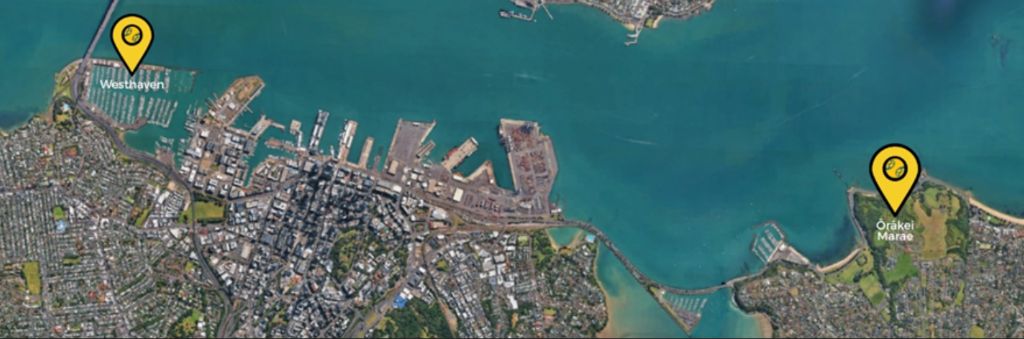
Key Milestones:
- 2019: NWŌ appealed the consent granted to Panuku Development Auckland to expand the Westhaven Marina on the basis that it did not recognise Ngāti Whātua Ōrākei as having the strongest connection with the area and taking a lead role in mana whenua engagement with Panuku.
- 2020: The High Court confirmed that the Environment Court has jurisdiction, and must, determine the relative strengths of the hapū/iwi relationships to an area affected by a proposal where relevant to the cultural effects of consent conditions.
023–2025: Final stages of the case concluded, resulting in this recognition of NWŌ deep and enduring connection to Westhaven.
Summary: Environment Court Interim Decision – [2025] NZEnvC 228
Case: Ngāti Whātua
Ōrākei Whai Maia Ltd v Auckland Council
Date of
Issue: 4 July 2025
Court:
Environment Court (Auckland)
Judges:
Alternate Judges L Newhook & M Doogan; Deputy
Commissioner G Paine; Pūkenga: Dr H
Hape
Background:
Panuku Development Auckland obtained resource consent from Auckland Council to expand the Westhaven Marina, including land reclamation and public space creation. Conditions required engagement with 19 listed mana whenua groups through a forum. Ngāti Whātua Ōrākei Whai Maia Ltd (NWŌ) appealed the conditions, asserting its relationship with Westhaven is materially stronger than that of the other iwi/hapū (s 274 parties), and it should take a lead role in engagement.
Key Legal Questions:
- Can the Court determine relative strength of tikanga-based relationships among iwi/hapū under the RMA?
- Should NWŌ be recognised as having a stronger relationship with Westhaven than the s 274 parties?
- What are the cultural effects and appropriate engagement conditions?
Findings:
- Jurisdiction Confirmed: The Court can and must make evidential findings on the relative strength of Māori relationships with land under s 6(e) RMA, if it informs the discharge of statutory obligations.
- Tikanga Assessment Valid: The Court relied on on NWŌ experts (whānau witnesses and an independent historian) principles from previous High Court decisions including several involving NWŌ and section 274 parties (NWŌT v Attorney-General, Ngāti Maru, Te Rūnanga o Ngāti Whātua) and guidance from Pūkenga Dr Hape, noting it does not declare tikanga but evaluates evidence-based claims.
- Outcome on
Relationships:
- Ngāti Whātua Ōrākei has a stronger relationship with the Westhaven area than any of the other s 274 parties, based on take raupatu, take tuūpuna, take tuku whenua, and, and occupation since the 18th century.
- The relationships of the s 274 parties are acknowledged as valid but distinct, not equal in strength to NWŌ.
- Tikanga Diversity Acknowledged: The Court recognised differing tikanga and traditions among iwi, and the inability to reconcile all competing perspectives through state processes.
 Gordon Campbell: On How US Courts Are Helping Donald Trump Steal The Mid-Terms
 Forest And Bird: Government Biodiversity Credit Scheme Welcomed As Opportunity For Restoration
 Office of the Ombudsman: Ombudsman Publishes Findings On Ministry Of Education Sensitive Claims Scheme
 Nelson City Council: Mayor Welcomes Auditor-General Decision Not To Prosecute Councillor
 Johnnie Freeland: Ko Tātou Tātou - Climate Action In Aotearoa Begins With Relationship
 Zero Waste Network Aotearoa: Container Return Scheme Bill Would Double Recycling Rates And Put Money Back In Households
 Wellington City Council: Statement From The Wellington Mayoral Forum On Options For Regional Governance Reform


