
 Scoop has an Ethical Paywall


“No Human Rights Without Sign Language Rights”: Spotlight On Deaf-Led AI Innovation In International Week Of Deaf People
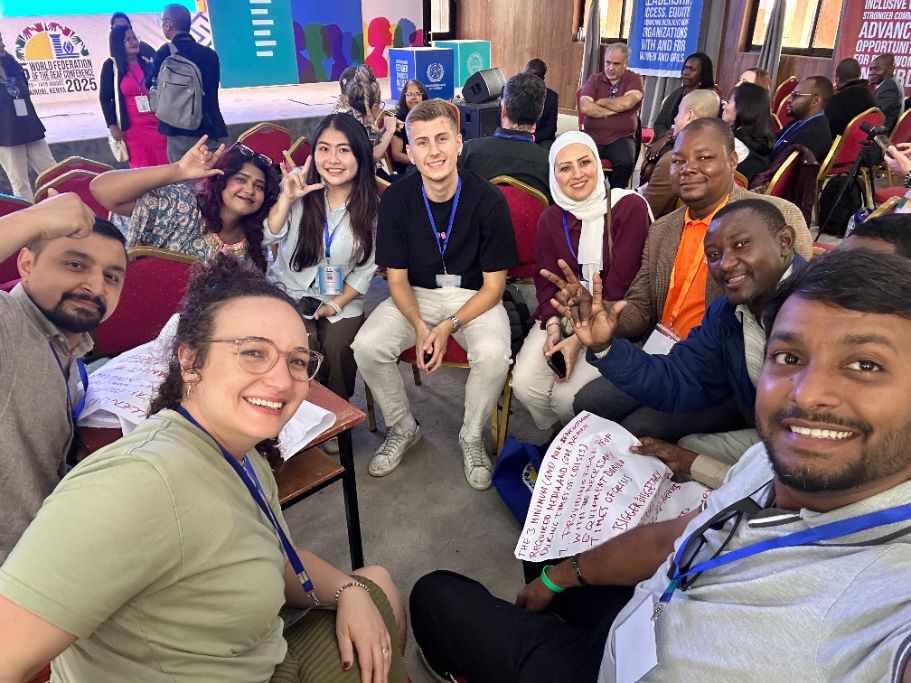
Wellington, NZ – Wednesday 17th September, 2025 – This year, International Week of Deaf People (IWDP), from Monday 22nd to Sunday 28th September, will spotlight basic human rights for Deaf people, in light of a critical emerging issue for the Deaf community: technosolutionism – the belief that artificial intelligence (AI) and tech alone can solve accessibility problems.
Erica Dawson, Deaf Cultural Lead for Deaf Aotearoa – who is Deaf herself, is calling on technology developers, policy makers, and everyday Kiwis to think differently. “Deaf people must be included from the very start, or tools will risk missing the mark,” she says.
Erica attended the World Federation of the Deaf conference in Kenya last month where she heard powerful conversations echoing this concern. “AI has amazing potential for the Deaf community,” Erica says, “but when tools are built for us without involving Deaf people, we often end up with solutions that are narrow, inaccurate, or simply unusable. What we need is Deaf-led design – tools that respect NZSL, our culture, and our communication styles, not ones that treat us like a problem to fix.”
AI tools that are adding value today include AI-powered captioning or transcription, and generative language models, which help with drafting, writing, and accessing information. But, Erica warns: “Their accuracy for NZSL is inconsistent, cultural context is too often ignored, and many of these technologies lack New Zealand-specific training data. If developers don’t involve Deaf people from the beginning, there is a risk of eroding the language, rather than helping NZSL to thrive.”
Lachlan Keating, Chief Executive of Deaf Aotearoa, adds: “NZSL access is not an optional add-on. It is central to the human rights of Deaf people. When AI or tech initiatives marginalise NZSL or assume hearing norms, they chip away at Deaf people’s access, dignity, and identity. This International Week of Deaf People, we urge everyone, from developers and businesses to government and communities, to support AI initiatives that are led by Deaf people, and to protect NZSL not just in theory but in practice.
“The Deaf community needs greater access to the use and knowledge of existing tools like transcription and writing assistants, while also being aware of their limitations. Looking ahead, we’re calling for NZSL-integrated technologies that generate or translate into NZSL, not just written or spoken languages, with strong oversight and leadership from Deaf people so that AI enhances human interpreters and Deaf cultural practices rather than replacing or medicalising them.”
As one of Aotearoa’s three official languages, alongside Te Reo and English, New Zealand Sign Language is more than just a means of communication. NZSL is most likely the native, first language for Deaf people born into Deaf families in Aotearoa, and it is essential for Deaf people to express themselves fully. Having fair access to NZSL gives Deaf people the opportunity to learn, thrive, and work with confidence, because when people can understand and communicate in their preferred language, their capacity to engage, contribute and belong increases. It underpins education, social participation, and personal identity, enabling Deaf New Zealanders to live with dignity and full participation in society.
 Gordon Campbell: On How US Courts Are Helping Donald Trump Steal The Mid-Terms
 Office of the Ombudsman: Ombudsman Publishes Findings On Ministry Of Education Sensitive Claims Scheme
 Nelson City Council: Mayor Welcomes Auditor-General Decision Not To Prosecute Councillor
 Johnnie Freeland: Ko Tātou Tātou - Climate Action In Aotearoa Begins With Relationship
 Zero Waste Network Aotearoa: Container Return Scheme Bill Would Double Recycling Rates And Put Money Back In Households
 Wellington City Council: Statement From The Wellington Mayoral Forum On Options For Regional Governance Reform
 MUNZ: TAIC Report On Kaitaki Incident Gives Shocking Picture Of Decline Of NZ Maritime Infrastructure


