
 Scoop has an Ethical Paywall


New Govt Initiative To Address Training Barriers For Rural, Pacific Workers
The launch of an industry-first Government training initiative pilot in Otago is set to help dismantle geographical and cultural access barriers to formal learning and create new career pathways for Pacific and rural workers whose employment may be at risk.
The move comes as regionally based primary industry manufacturers downsize, creating uncertainty for rural towns where a single large employer dominates the local economy.
Industry experts say that if successful, Project Fetu could become a scalable model for regional upskilling, establishing a methodology for delivering training in rural areas without local tertiary infrastructure, while tackling inequities and helping close critical technology skill gaps in manufacturing nationwide. This would not only drive local, regional and national productivity and economic gains but also secure a sustainable workforce pipeline that the manufacturing sector urgently needs.
Latest Government research shows Pacific peoples have consistently made up around 12% of those on the Jobseeker Support benefit, despite being just 9% of New Zealand’s population. Pacific youth NEET (not in employment, education, or training) rates climbed from 15.9% in 2023 to 19.9% in 2024, nearly double the national rate of 11.3%.1
The data shows Pacific peoples are one of the youngest and fastest-growing populations in New Zealand, with over half being under 30 years old, making them a vital part of the nation’s future workforce. However, educational attainment remains a key barrier, with only 65% of Pacific students achieving NCEA Level 2 compared with 73% nationally, and just 18% holding a bachelor’s degree or higher against a national rate of 37%. In the workforce, Pacific peoples face unemployment and underutilisation rates of 10% and 18% respectively, significantly higher than the national averages of 5% and 12%.2
Project Fetu, a partnership between the Oamaru Pacific Island Trust (OPIT) and Hanga-Aro-Rau Workforce Development Council for the manufacturing, engineering and logistics sectors, will support rural Pacific workers to complete the NZQA-recognised Digital Skills for Manufacturing micro-credential. The programme, delivered at OPIT’s Learning Hub from mid-September, combines community-based learning, supported by workplaces and strengthened through wraparound support delivered by trusted community networks. Educators from Auckland will be brought to Oamaru to deliver the tailored six-week training.
Mata’aga Hana Fanene-Taiti, CEO of Oamaru Pacific Island Trust and Deputy Mayor of Waitaki, says many Pacific workers arrive in New Zealand without formal qualifications, despite years of work experience.
She says the name Fetu, meaning star in Gagana Samoa, honours Pacific navigators who used the night sky to guide journeys, symbolising a new path for workers seeking skills and recognition.
“Traditional training pathways are often inaccessible due to cost, distance or time. Project Fetu is about creating hybrid, community-based ways of learning that meet people where they are, not just for Pacific people but for those in rural areas too.
“The initiative allows us to provide alternative hybrid ways of upskilling members in our community, especially from a rural perspective. We don’t have tertiary providers here, so this highlights the demand and the need from the regions, but also a different way of teaching and learning that could benefit others too.
“I think there's a different way of learning for Pacific people. We're quite eclectic learners. We listen and we learn by feeling, by using all of our senses, not necessarily in a traditional classroom setting,” she says.
Fanene-Taiti says in towns like Oamaru, where local economies rely heavily on a handful of employers, industry change can have disproportionate impacts.
She says a number of meat processors are currently downsizing in the South Island, affecting Pacific workers in particular.
“It’s unstable and pretty volatile at the moment, which highlights the urgent need we have for diversification. We want to provide other pathway opportunities for our Pacific community and others who are working in the primary sector to consider alternative industries.
“For some, this micro-credential could open the door to new roles in construction or manufacturing. For others, it’s a chance to step up into supervisory or managerial positions, roles Pacific workers have historically struggled to access,” she says.
Fanene-Taiti says the initiative is deliberately designed with families in mind.
“Learners’ children and parents will be invited to the graduation in November. Gold standard for us is seeing all ten learners walk across the stage to receive a certificate with their families watching. Some of them have never received a qualification before. When their kids see that success, it becomes normalised. They think, ‘If Dad can do it, I can too.’ That’s the intergenerational impact we want,” she says.
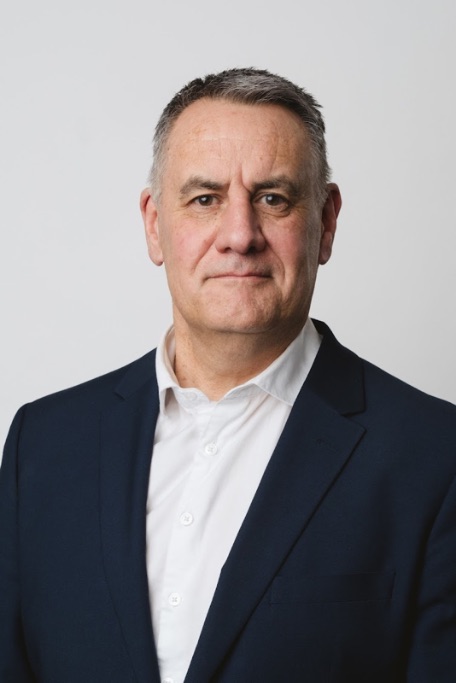
Phil Alexander-Crawford, Chief Executive of Hanga-Aro-Rau, says by piloting micro-credentials in this way and in this region, Project Fetu aims to support workers who may be displaced to re-train and position themselves for roles in new sectors such as construction, logistics, or advanced manufacturing.
Alexander-Crawford says, unlike conventional training, the programme was co-designed with learners and adjusted in real time and offers participants skills that can be transferred beyond their current employers.
He says flexibility in training and tailoring it to the needs of the learners is critical to its success.
“The Pacific workforce is growing and younger, and ensuring a sustainable pipeline is critical, particularly in regions where a single business closure can have wide-reaching impacts. Delivering training in culturally appropriate ways will ensure we get the best out of learners enabling them to immediately contribute to the workforce.
“There is also an issue of visibility. Too often people are unaware of the manufacturing sector and the variety of careers it offers, let alone the educational pathways that lead into these roles. The digital manufacturing education pilot is about changing that narrative and putting the sector firmly on the jobs map.
“We see Project Fetu as a proof of concept for the rest of New Zealand. If it succeeds in Waitaki, it will show that community-led, culturally responsive workforce development can be scaled to other regions. That is how we begin to close the gaps for Pacific peoples while strengthening industry capability across the country,” he says.
Fanene-Taiti hopes the pilot will inspire similar models across Aotearoa.
“We have to create innovative ways of bringing education to the regions, ways that are relevant, successful, and impactful. This programme is an excellent example of community, the education sector and industry coming together to solve a problem and create an innovative solution for our people in our region. We would love to see this approach of collaboration scaled across the country.
“This is about social return as much as financial return. It’s about building confidence, creating role models, and strengthening our communities so the next generation can thrive,” she says.
Notes:
[1]Home. (n.d.). Ministry for Pacific Peoples. See here.
[2]Home. (n.d.). Ministry for Pacific Peoples. See here.
 Bill Bennett: Fixed Voice Rules Head For Deregulation
 UN Department of Global Communications: United Nations Proposes New Global Dashboard To Measure Progress Beyond GDP
 Banking Ombudsman Scheme: Fraud Check Delays Well Worth The Inconvenience, Says Banking Ombudsman
 Asia Pacific AML: NZ’s Financial Crime Gap - Beyond The 'Number 8 Wire' Mentality
 Westpac New Zealand: Kiwi Households Adapting Despite Widespread Cost Pressure Concerns, Westpac Survey Shows
 University of Auckland: Kids’ Screen Use Linked To Long-Term Deficits In Self-Control And Attention


