
 Scoop has an Ethical Paywall


Why Artists And Collectors Flock To Magnolia Pearl’s Charitable Resale Market

Around the world, closets overflow and textile waste piles up by the ton. The global fashion industry, worth nearly two trillion dollars in 2024, faces a dilemma: how to satisfy consumers’ appetite for novelty while reducing the damage that overproduction causes. Out of this tension, a parallel economy has taken hold. The resale market for clothing is growing by an estimated 15 to 20 percent each year, a pace that easily outstrips traditional retail.
Within this fast-growing sector, one unexpected name has captured the attention of artists and collectors alike. Magnolia Pearl, a Texas-born label, has quietly turned secondhand demand into a force for philanthropy.
From Scarcity to Secondary Market
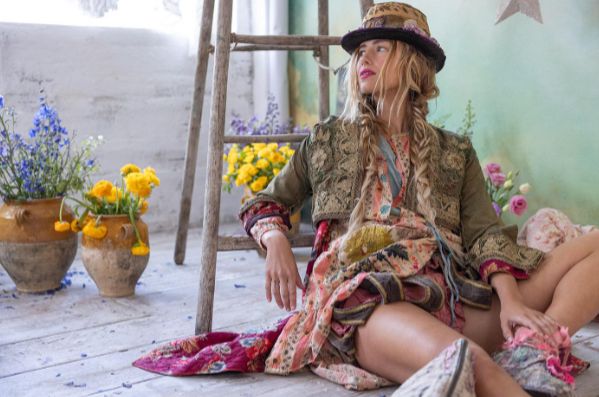
Magnolia Pearl was never built for the churn of seasonal fashion. The company produces its clothes in small, seasonless batches, each piece hand-distressed and visibly mended. That deliberate scarcity has transformed its garments into sought-after collectibles. Analysts expect the global resale fashion sector to continue expanding at double-digit rates through the decade. Within this surge, Magnolia Pearl occupies a unique niche: garments designed to appreciate in value, with collectors frequently paying twice the original price.
In 2023 the company formalised what had long been happening informally. It launched Magnolia Pearl Trade, a monitored marketplace where fans can buy and sell authenticated pieces. Rare samples and long-sold-out designs are auctioned alongside gently worn classics. In a two trillion dollar fashion market often criticised for waste and overproduction, the platform offers a different calculus: clothing as both investment and instrument for social good.
Philanthropy as Structure, Not Afterthought
Unlike traditional luxury resale, where profits flow mainly to sellers, Magnolia Pearl Trade directs between 25 and 100 percent of fees and final sale values to the Magnolia Pearl Peace Warrior Foundation. Since its founding in 2020 the foundation has raised more than half a million dollars. The beneficiaries are varied, including housing and healthcare programs for Indigenous communities, disaster relief efforts and arts education for children. Each resale becomes not just a transaction but an act of philanthropy.
This blending of commerce and charity challenges the usual boundaries of fashion economics. In an industry often criticised for exploiting cheap labour and generating mountains of textile waste, Magnolia Pearl turns scarcity into a resource for others. The clothes become vehicles for a quiet redistribution, proof that the circular economy can be more than a marketing slogan.
A Brand Born of Survival
Robin Brown, Magnolia Pearl’s founder, knows what it means to make beauty from what has been discarded. Raised in poverty and often without a stable home, she learned to stitch and mend as a way to keep her family clothed. That history became the brand’s aesthetic: visible mending, paint-splattered fabrics and garments that celebrate imperfection. Her 2024 memoir, Glitter Saints: The Cosmic Art of Forgiveness, traces how creating from scraps was less a pastime than a lifeline.
The same ethic shapes the business today. Brown has said that helping others is not a public-relations move but a continuation of what kept her alive. The Peace Warrior Foundation is, in a sense, her story turned outward: the personal act of mending scaled into a public act of care.
Cultural Currency Beyond the Catwalk
Magnolia Pearl’s pieces have appeared in music videos, television productions and private wardrobes without splashy advertising campaigns. Artists such as Taylor Swift, Whoopi Goldberg and Betsey Johnson have been spotted in the brand’s distinctive garments, lending them a cultural currency that advertising budgets cannot buy. Their quiet endorsement fuels the resale market, where collectors treat the clothes like limited-edition art.
For those who buy and sell on Magnolia Pearl Trade, the draw is as much about meaning as money. Each bid is both a wager and a contribution, a way of owning a fragment of a story that began with a girl stitching her way through hardship and now funds shelters and classrooms. In a fashion industry chasing the next trend, Magnolia Pearl offers a different urgency: to prove that what we wear can still help repair the world, one auction at a time
 Bill Bennett: Fixed Voice Rules Head For Deregulation
 UN Department of Global Communications: United Nations Proposes New Global Dashboard To Measure Progress Beyond GDP
 Banking Ombudsman Scheme: Fraud Check Delays Well Worth The Inconvenience, Says Banking Ombudsman
 Asia Pacific AML: NZ’s Financial Crime Gap - Beyond The 'Number 8 Wire' Mentality
 Westpac New Zealand: Kiwi Households Adapting Despite Widespread Cost Pressure Concerns, Westpac Survey Shows
 University of Auckland: Kids’ Screen Use Linked To Long-Term Deficits In Self-Control And Attention


