
 Scoop has an Ethical Paywall


The Jobs AI Can’t Touch: Skills Group Reveals The Careers Set To Soar
Data shows major opportunity for school leavers as trade shortages grow
As artificial intelligence reshapes workplaces globally, a different story is emerging from New Zealand’s trades and service industries. While many professions face uncertainty, several career paths remain firmly future-proof - and urgently need more people.
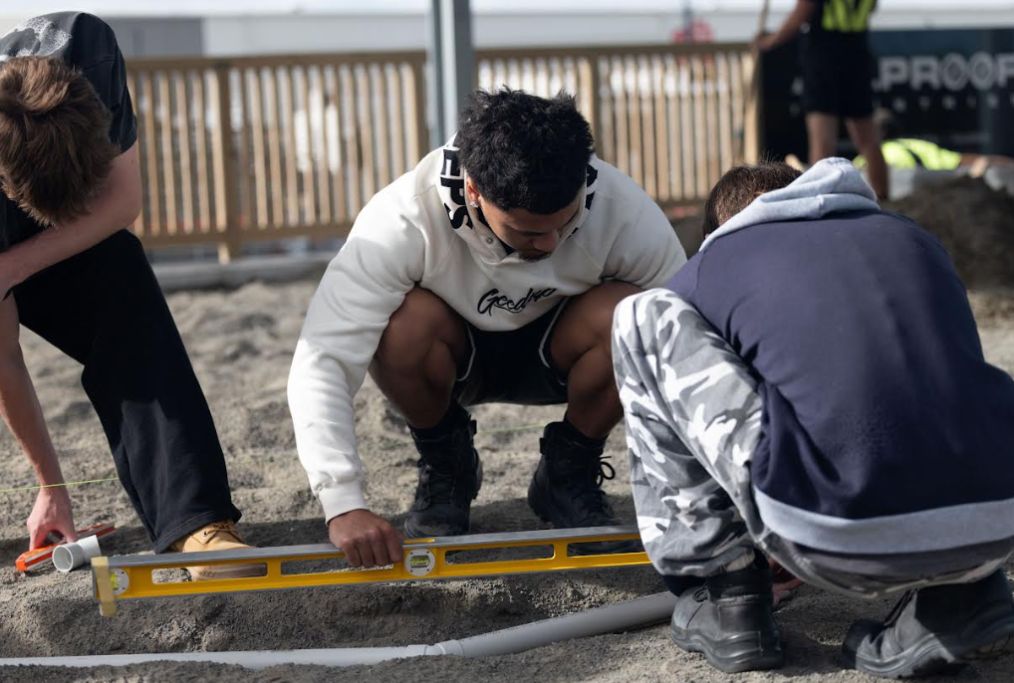
Skills Group is New Zealand’s largest private training organisation and its Director of People, Jane Kennelly, says careers in hairdressing, plumbing, gasfitting and drainlaying, roofing, electrical and culinary arts stand out for their long-term resilience. These professions rely on human judgement, dexterity, creativity and real-time decision-making — capabilities that AI cannot meaningfully replicate.
“AI can follow the recipe, but only a person can taste the soup,” Kennelly says. “Whether you’re shaping hair, diagnosing a fault under pressure, adjusting the taste of a dish, working at height or reading a client’s needs - the real skill comes from interpreting the moment. These careers depend on people, not algorithms.”
At the same time, the trades themselves are evolving, driven by a wave of new digital tools - a shift Kennelly describes as moving from spanners to scanners. Electrical apprentices, for example, now routinely use tablets for fault diagnostics before picking up their tools, blending digital capability with hands-on precision. Across the sector, smart sensors, drone footage, digital plans and AR/VR simulations are increasingly standard in training and on-the-job learning.
New Zealand’s workforce data underscores the scale of opportunity. Industry estimates show the country is currently short around 6,000 electricians, while economics agency Infometrics forecasts more than 5,000 plumbing, gasfitting and drainlaying (PGD) job openings through to 2030. At the same time, Skills Group’s own data shows Electrical Level 4 apprentice enrolments have fallen by around 16 percent between December 2023 and June 2025, while PGD Level 4 enrolments are down eight percent — reinforcing the need to strengthen the training pipeline as demand continues to accelerate.
“This imbalance between need and supply is one of the biggest opportunities for young people and career-changers,” Kennelly says. “If we don’t address it, New Zealand risks slowing down essential housing and infrastructure projects. These are not optional skills — they’re critical to how the country functions.”
The timing is significant. With thousands of young New Zealanders receiving their NCEA exam results this week and considering their next steps, Kennelly says families need a clearer understanding of the strength and future-proof nature of these careers.
“Many parents still default to university as the safest pathway, unaware that some of the most secure, technology-proof careers sit within the trades,” she says.
“These are specialist, future-focused professions that blend digital skill with real-world craftsmanship.”
Skills Group’s nationwide network of modern campuses for electrical trades, culinary arts and drainlaying, are preparing pre-trade and trade learners for work in this intersection of practical and digital skill — from immersive simulators to hands-on trade booths and digital diagnostic tools that mirror the environments they will encounter in the field.
Kennelly says the message for school leavers is clear: “Technology will change how we work, but these careers remain rooted in human skill. The future isn’t replacing tradespeople — it’s upgrading them.”
 Bill Bennett: Fixed Voice Rules Head For Deregulation
 UN Department of Global Communications: United Nations Proposes New Global Dashboard To Measure Progress Beyond GDP
 Banking Ombudsman Scheme: Fraud Check Delays Well Worth The Inconvenience, Says Banking Ombudsman
 Asia Pacific AML: NZ’s Financial Crime Gap - Beyond The 'Number 8 Wire' Mentality
 Westpac New Zealand: Kiwi Households Adapting Despite Widespread Cost Pressure Concerns, Westpac Survey Shows
 University of Auckland: Kids’ Screen Use Linked To Long-Term Deficits In Self-Control And Attention


