
 Scoop has an Ethical Paywall


Made For Love? Norton Study Reveals 48% Would Date An AI
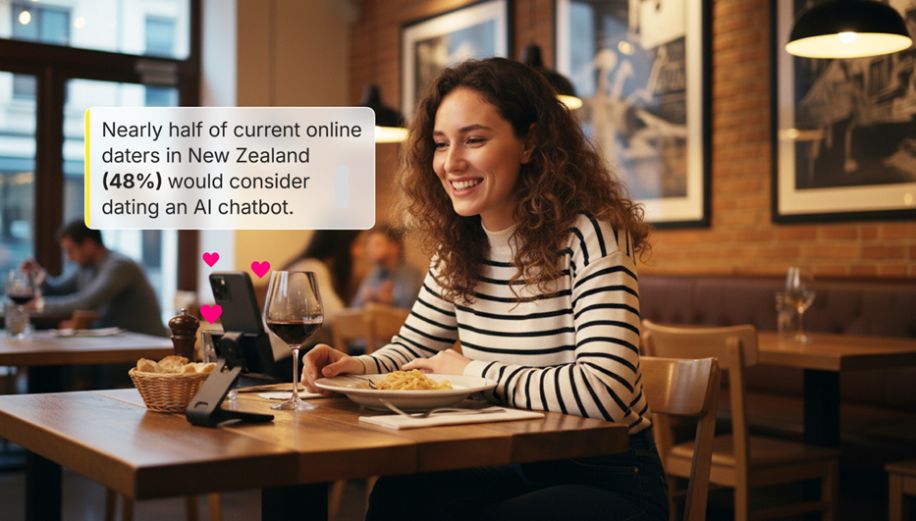
- With loneliness levels high and trust levels low, millions of online daters are open to romantic relationships with artificial intelligence, blurring the line between comfort, connection, and risk.
Auckland – Would you date artificial intelligence? New findings from the Norton Insights Report: Artificial Intimacy suggest the idea is now a part of the mainstream, with 48% of current online daters saying they would consider dating an AI, and 25% believing it is possible to develop romantic feelings for one. After all, who wouldn’t be drawn to a “perfect” partner designed to be attentive, affirming and always available?
With loneliness on the rise and online trust in freefall, Kiwis are becoming open to deeper relationships with technology, creating new emotional and financial vulnerabilities that scammers are already weaponising. According to the Gen Threat Report, social engineering - threats that rely on psychological and emotional manipulation - accounts for over 90% of all digital threats to individuals. Dating scams are some of the most prevalent, with more than 17 million dating scams blocked globally in Q4 2025 alone, an over 19% increase from 2024.
“When loneliness is high, trust can form very quickly online to fill that void, and that’s exactly what scammers rely on to exploit our need for love and companionship,” said Leyla Bilge, Global Head of Scam Research for Norton. “As more people seek connection through apps, chatbots, and digital tools, it’s critical to pause, protect personal information, and remember that real trust should never come with pressure or secrecy. AI itself isn’t a scam, and many people find it genuinely feels supportive or comforting, but it’s still artificial and there is no substitute for real human connection.”
Loneliness Fuelling AI Intimacy
As traditional support systems strain, many people are turning inward, and online, for comfort. 32% of current online daters say they would use an AI chatbot for therapy after a heartbreak, and 34% of daters who have use AI for advice say they would trust an AI relationship coach more than a human friend or family member for relationship advice.
Trust Is a Two-Way Street
This shift in attitudes about dating and AI is unfolding amid a widespread loss of trust in online platforms as well as the credibility of people on them. 39% of current dating app users encounter suspicious profiles on at least a weekly basis. Verifying that the person you’re chatting with online is really looking for love, as well as aligned to their profile image and description, is harder than ever. And Kiwis are both using AI to enhance their profiles, while being bothered by those that do.
According to the report, 65% of dating app users said it would bother them if they found out their match used AI to modify their pictures or draft their chat responses. However online daters also indicated that they would use AI to:
- 46% to help them develop their dating app profile
- 39% to enhance their photos (with 34% admitting they have used AI to enhance their photos)
- 48% to write a pick up line/conversation starter
- 29% to go on virtual dates for them as a proxy
- 43% for dating coaching
- 38% to practice flirting
Safe Spaces Are Hard to Find
When asked to rate the safety of apps based on interactions with people they met online, current online daters who rated an app as poor or unsafe most frequently identified Meta-owned platforms, Instagram, Facebook, and WhatsApp, as the least safe places to find a match.
- Instagram 54%
- Facebook 44%
- WhatsApp 40%
- Tinder 34%
- Bumble 31%
- Hinge 29%
- Snapchat 22%
- eHarmony 19%
- TanTan 9%
- Hud 8%
“New Zealanders are finding it increasingly hard to trust the images, descriptions, and conversations they see while dating online, and even harder to trust the platforms that are meant to connect them with real people looking for genuine relationships,” says Mark Gorrie, VP APAC at Norton. “AI has accelerated that breakdown in trust. It’s made it easier to manipulate images, fabricate identities, and deceive others at scale. AI is leaving New Zealanders second-guessing who, or what, they’re engaging with online. It is unsurprising that some are now looking to AI for intimacy.”
From Support Tool to Romantic Partner
What starts as emotional support is increasingly evolving into something more intimate. AI systems are designed to be attentive, empathetic, and always available, qualities that can quickly foster attachment.
The report finds that 25% of current dating app users believe it is possible to fall for an AI chatbot, while 28% believe an AI partner would be more emotionally supportive than a human one. 33% of current daters said they would consider engaging romantically with an AI powered clone of their celebrity crush.
Love, Trust, and a New Scam Landscape
As emotional bonds with AI deepen, so do new vulnerabilities. The report shows that 22% of current or past online daters say they have been targeted by a dating scam, and 30% of those daters targeted report falling victim. 33% of current daters also say they’ve been catfished as well as 19% having experienced or been notified of another profile using their photos.
21% of daters reported being contacted by someone impersonating a celebrity or public figure. Among those targeted, 18% clicked on links they shared, 11% shared personal information, and 8% even sent money.
Where AI, Dating, and Digital Trust Collide
The 2026 Norton Cyber Safety Insights Report: Online Dating highlights a defining tension of modern relationships. AI is reshaping how people find comfort, advice, and companionship, but it is also expanding the attack surface for emotional manipulation and fraud.
Norton 360 with AI-powered Scam Detection, advanced tiers of Norton VPN, and Norton Mobile Security help protect online daters by identifying fake profiles, blocking phishing links, detecting scams in real time, and safeguarding personal information across devices.
For tips on dating more safely online and to read the full report, visit Norton.com.
About the 2026 Norton Insights Report: Artificial Intimacy Edition
The study was conducted online within New Zealand by Dynata on behalf of Gen from July 24th to 13th August 2025 among 1,000 adults ages 18 and older. Data are weighted where necessary by age, gender, and region, to be nationally representative.
About the Gen Threat Labs
Gen Threat Labs is the Cyber Safety research team within Gen, focused on uncovering and analysing the latest digital threats and scams worldwide. Rooted in data, research, and technical expertise, the team identifies patterns and risks that shape the evolving cyber landscape. Their insights power the security technologies that protect people across Gen's portfolio of trusted brands, including Norton, Avast, LifeLock, and others.
About Norton
Norton is a leader in Cyber Safety, and part of Gen (NASDAQ: GEN), a global company dedicated to powering Digital Freedom with a family of trusted consumer brands. Norton empowers millions of individuals and families with award-winning protection for their devices, online privacy, and identity. Norton products and services are certified by independent testing organizations including AV-TEST, AV-Comparatives, and SE Labs. Norton is a founding.
 Westpac New Zealand: Kiwi Households Adapting Despite Widespread Cost Pressure Concerns, Westpac Survey Shows
 University of Auckland: Kids’ Screen Use Linked To Long-Term Deficits In Self-Control And Attention
 University of Auckland: Research To Address Equity In STEM For Māori, Pacific And Female Students
 Stats NZ: Economic Impacts On New Zealand From Conflict In The Middle East – Report
 Advertising Standards Authority: ASA Annual Report 2025 - Platform-Neutral Regulation Keeps Pace With Digital Advertising
 Science Media Centre: Lead Pipes Banned For New Plumbing – Expert Reaction


