
 Scoop has an Ethical Paywall


Preparing our trees’ defences against myrtle rust
24 September 2019
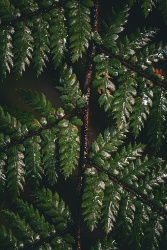
Myrtle rust is a disease caused by an invasive pathogen that infects iconic native New Zealand trees in the Myrtaceae family, such as pōhutukawa and manuka. The windborne fungus causes tree dieback and potentially tree death.
It was first detected in New Zealand in March 2017 and is now found throughout the upper North Island. It has currently been recorded as far south as Greymouth.
Scientists are currently investigating how the pathogen is reproducing around Aotearoa.
Researcher Dr Michael Bartlett says we need to better
understand the way myrtle rust
(Austropuccinia psidii) is
reproducing in order to predict how the pathogen will adapt
to the New Zealand environment. “If the long-term
management of myrtle rust in New Zealand involves breeding
trees for pathogen resistance, then understanding the
diversity and adaptability of that pathogen is the key to
success,” says Michael.
Pathogens can either reproduce asexually by cloning themselves, or sexually, which involves a recombination of genes. The more a pathogen reproduces sexually, the easier it can adapt to a new environment.
Michael says he will use genetic markers to measure how much genetic recombination is happening in the wild. He will also experiment to find out what makes myrtle rust switch from clonal to sexual reproduction.
Based at Crown Research Institute (CRI) Scion, Michael’s work is part of a new programme managed by CRI Manaaki Whenua called Beyond Myrtle Rust: Towards Ecosystem Resilience. The five-year programme brings together researchers from many universities and CRIs to investigate how New Zealand can learn to live with myrtle rust, while protecting our native trees.
To learn more about myrtle rust and find out how the public can help track where it has spread to, visit https://www.myrtlerust.org.nz/
The Beyond Myrtle Rust programme aligns with the National Science Challenge BioHeritage goal of Tiaki (Protect): contributing to world class biosecurity.
ends
 Gordon Campbell: On How US Courts Are Helping Donald Trump Steal The Mid-Terms
 Forest And Bird: Government Biodiversity Credit Scheme Welcomed As Opportunity For Restoration
 Office of the Ombudsman: Ombudsman Publishes Findings On Ministry Of Education Sensitive Claims Scheme
 Nelson City Council: Mayor Welcomes Auditor-General Decision Not To Prosecute Councillor
 Johnnie Freeland: Ko Tātou Tātou - Climate Action In Aotearoa Begins With Relationship
 Zero Waste Network Aotearoa: Container Return Scheme Bill Would Double Recycling Rates And Put Money Back In Households
 Wellington City Council: Statement From The Wellington Mayoral Forum On Options For Regional Governance Reform


