
 Scoop has an Ethical Paywall


Skoltech Researchers Developed A Method To Accurately Evaluate Fibrous Material Porosity From A Single Image
Moscow, December 23, 2025
Researchers from Skoltech Engineering Center’s Hierarchically Structured Materials Laboratory developed a new method to determine the porosity of fibrous materials using a single image taken with a standard optical microscope. The algorithm analyzes the perspective effect and statistical variations in fiber thickness across the material’s layers to enable calculation of true volumetric porosity with an average error of just 3.5%. This approach outperforms conventional 2D image analysis techniques by a large margin and could be used by manufacturers to control material quality in real time. The research was published in the journal Measurement.
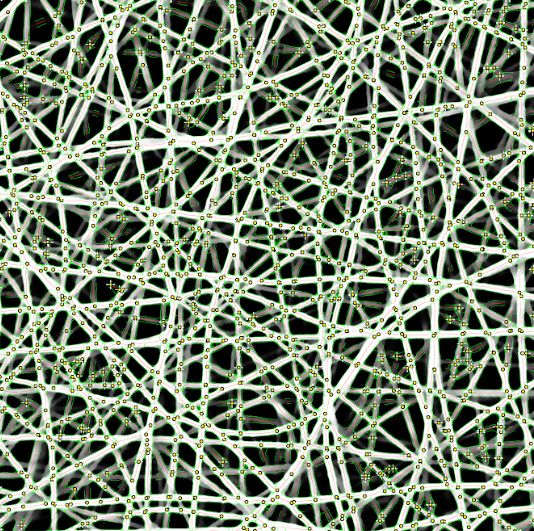
Fibrous materials are used extensively in many industries, including biomedicine, energy production, acoustic insulation, and composite materials. Their mechanical strength, permeability, and efficiency depend on a key feature – porosity, or the free space between fibers. However, conventional methods require sophisticated equipment, such as microtomographs, or complex physical measurements to accurately evaluate porosity.
Existing image analysis methods based on digital porosity, or the percentage of open areas in a 2D image, often produce errors of 50% or higher because they fail to consider the material’s 3D structure and fiber depth distribution.
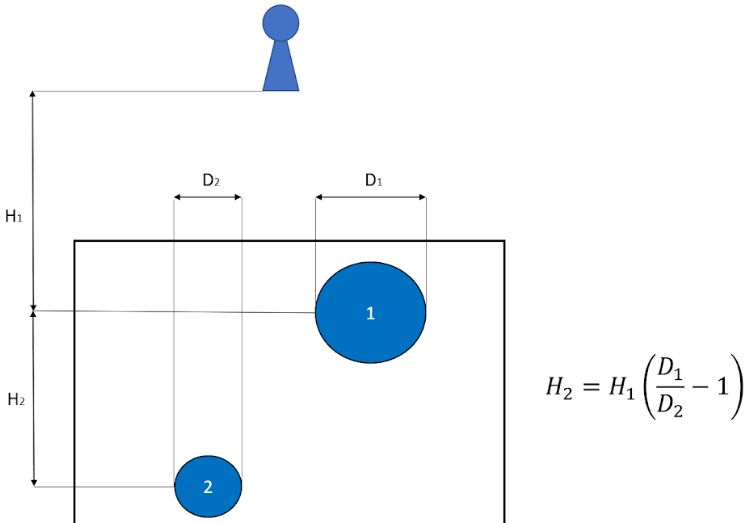
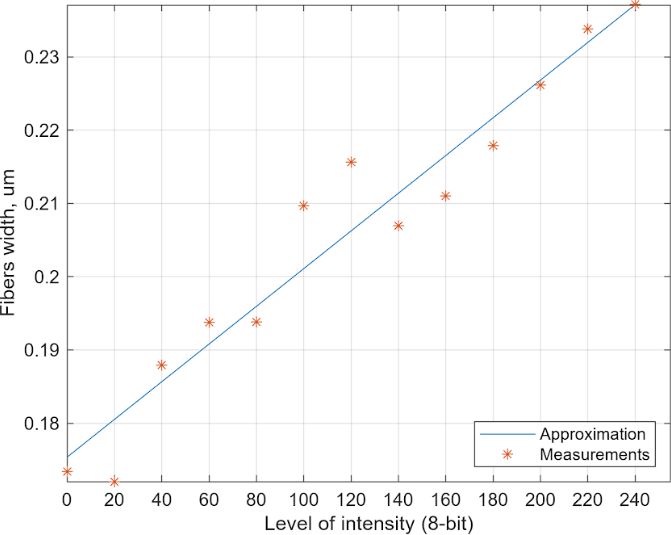
To address this issue, the Skoltech team proposed a novel approach using perspective effect analysis of a single image. In optical microscopy, fibers in the lower layers of a material look thinner due to the perspective effect. The new algorithm statistically analyzes how apparent fiber thickness changes with brightness, which decreases with depth. Using this data, the method calculates the material’s depth and true volumetric porosity.
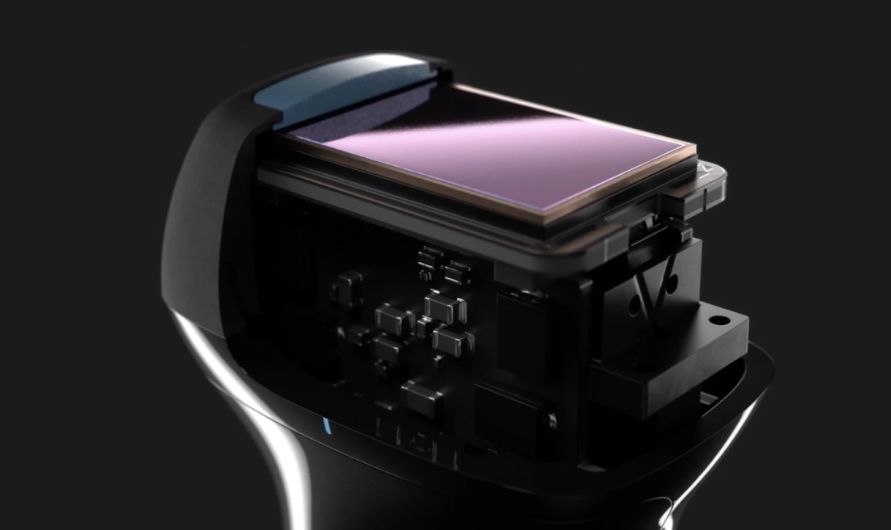
The developed methodology comprises three stages: preliminary digital image processing (for images obtained by a non-optical camera, artificial modeling of perspective distortions is additionally possible, including for electron microscope images), identification of fibers and their characteristics using the Ridge Detection algorithm in the Fiji software, and subsequent calculation of porosity based on fiber distribution statistics across layers.
This method quickly and precisely evaluates the porosity of various fibrous materials, including electrospun nanofibers used in filters or medical products, as well as aerospace composite materials. Easy to implement and automatable, this method is ideal for real-time quality control using machine vision on the production line. Its modest equipment requirements, such as a standard optical microscope, could facilitate its widespread adoption in research and industry.
“Our method solves the fundamental problem of transitioning from a 2D image to a 3D representation of a material’s structure. Rather than merely counting pixels on the surface, we look deep into the material to see how apparent fiber thickness changes. Therefore, we can accurately determine true porosity without using expensive 3D reconstruction equipment,” study lead author and Skoltech Engineering Systems PhD student Anton Biriukov commented.
“In my opinion, the inventive aspect of our research was the use of 3D-printed physical models of the fibrous material, which provided true porosity values and left no doubt about the reliability of the proposed method,” Professor Alexander Korsunsky, the study leader and the head of the Hierarchically Structured Materials Laboratory at Skoltech Engineering, explained.
Read more at: https://www.skoltech.ru/
 Bill Bennett: Fixed Voice Rules Head For Deregulation
 UN Department of Global Communications: United Nations Proposes New Global Dashboard To Measure Progress Beyond GDP
 Banking Ombudsman Scheme: Fraud Check Delays Well Worth The Inconvenience, Says Banking Ombudsman
 Asia Pacific AML: NZ’s Financial Crime Gap - Beyond The 'Number 8 Wire' Mentality
 Westpac New Zealand: Kiwi Households Adapting Despite Widespread Cost Pressure Concerns, Westpac Survey Shows
 University of Auckland: Kids’ Screen Use Linked To Long-Term Deficits In Self-Control And Attention


