
 Scoop has an Ethical Paywall


MARS Bioimaging Closes $15M Series A To Scale Portable Photon-Counting CT Scanners
MARS Bioimaging, a New Zealand–headquartered medical device company specialising in portable spectral photon-counting CT scanners for point-of-care diagnosis and clinical research, has closed an oversubscribed $15 million Series A round.
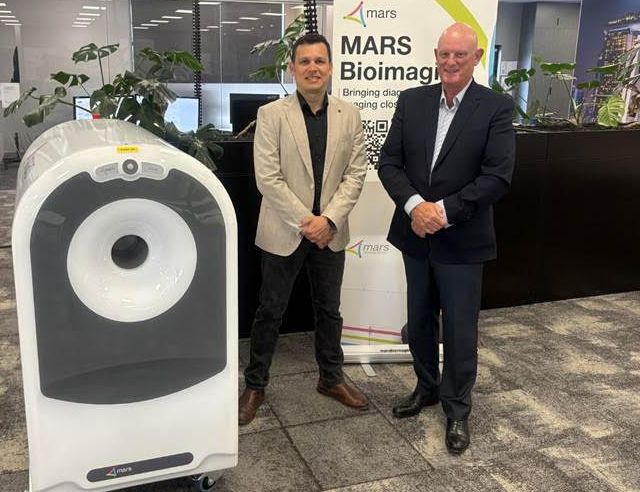
New Zealand-based venture capital firm Pacific Channel led the round, which was raised in two tranches: $7.6 million in an initial close, followed by $7.4 million in new capital in 2026, for a total of $15 million. New international investors include a Singapore-based med-sector company, and an investor from Switzerland secured through the New Zealand Government’s Active Investor Plus (AIP) programme with support from NZTE and Invest New Zealand.
The company will use the new funding to accelerate the commercial adoption of its spectral photon-counting CT scanners, which deliver 3D colour X-ray imaging with advanced material differentiation, across key markets including the United States, New Zealand and select emerging markets such as India.
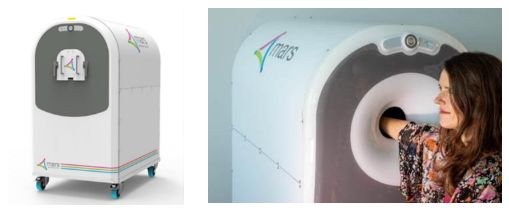
(image right): MARS Microlab scanner, a portable photon-counting CT system for clinical research (Photo/Supplied)
Christopher Stoelhorst, Chairman of MARS Bioimaging, says, “This investment gives us the momentum to scale adoption of our diagnostic and clinical research scanners and drive meaningful improvements in health economics and equity. With major commercial and market milestones achieved over the past year, the calibre of new international investors we have attracted reinforces our strategy and enables us to accelerate our growth plans.”
Brent Ogilvie, Managing Partner of Pacific Channel, says, “MARS Bioimaging is entering a critical growth phase, with its photon-counting CT scanners progressing along a clear clinical pathway and are well-positioned for scaled adoption. This investment reflects our confidence in MARS’s differentiated technology, its world-class team, and its ability to deliver meaningful improvements in clinical and research outcomes through advanced imaging.”
“We’re on a mission to transform point-of-care diagnostic solutions for patients and healthcare providers, and advance premium imaging in the community,” said Dr Ojas Mahapatra, Group CEO, MARS Bioimaging. “This investment allows us to build our market capability, including expanding our sales and business development teams in New Zealand and the United States. Our new investors will also help open access to emerging markets, while NZTE will continue to be an important partner supporting our international expansion.”
The MARS Extremity and Microlab scanners are the world’s first commercially available portable spectral photon-counting CT medical scanners. Designed to transform pre-clinical research and point-of-care diagnostic imaging, they support applications ranging from orthopaedics to contrast agent development.
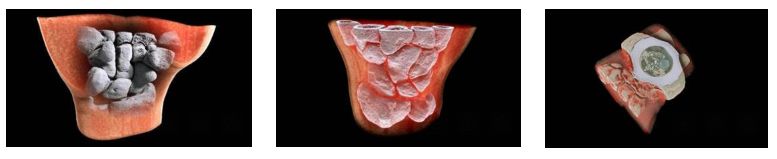
Unlike traditional low-resolution, black-and-white CT scans, MARS delivers high-resolution, 3D colour images of the body, enabling faster and more accurate material differentiation and diagnosis. The compact system visualises soft tissue, bone, blood vessels and metallic implants in extraordinary detail, without the need to inject X-ray contrast agents into the patient.
About MARS Bioimaging:
MARS Bioimaging Limited, a Christchurch, New Zealand-based medical imaging company, has established itself as a world leader in spectral molecular imaging. MARS developed the world’s first commercially available portable spectral photon-counting CT scanner, designed for a range of clinical and research applications, including orthopaedics and the development of new contrast agents, with the goal of providing the highest-quality diagnostic imaging at the point of care. MARS imaging systems leverage advanced Medipix technology developed at CERN by the Medipix3 Collaboration, which includes the University of Canterbury. MARS holds the exclusive license from CERN for deploying this technology for medical imaging at the point of care. For more information, see https://www.marsbioimaging.com/
 University of Auckland: Kids’ Screen Use Linked To Long-Term Deficits In Self-Control And Attention
 University of Auckland: Research To Address Equity In STEM For Māori, Pacific And Female Students
 Stats NZ: Economic Impacts On New Zealand From Conflict In The Middle East – Report
 Advertising Standards Authority: ASA Annual Report 2025 - Platform-Neutral Regulation Keeps Pace With Digital Advertising
 Science Media Centre: Lead Pipes Banned For New Plumbing – Expert Reaction
 New Zealand Young Physicists Trust: Auckland To Host The ‘World Cup Of Physics’ In 2027; Search Begins For Student-Designed Tournament Logo


