
 Scoop has an Ethical Paywall


Help Protect Canterbury’s Braided River Birds This Spring
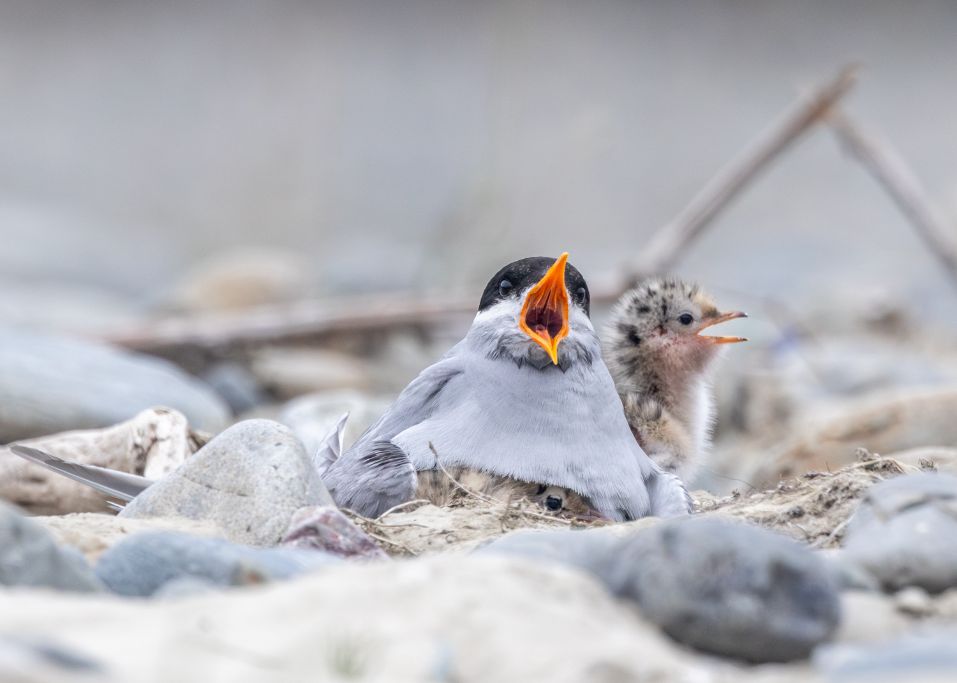
Nesting is underway for some of Canterbury’s special braided river birds and people can do their bit for nature by helping to keep them safe.
Wrybills/ngutu pare and banded dotterels/pohowera have begun nesting on the Ashley River/Rakahuri, Waimakariri and other rivers, and will soon be joined by black-fronted terns/tarapirohe, black-billed gulls/ tarāpuka and others. The Ashley Rakahuri Rivercare Group has been working to help protect the birds for more than 20 years.
This year they have seen the return of a wrybill, nicknamed ‘the wizard’, they first banded 15 years ago. The male is still going strong and with his mate has already had one nesting attempt, with the chick and egg unfortunately eaten by an introduced German owl.
Each spring and summer from the start of September through to the end of February, thousands of braided river birds return to nest on the wide gravel beds of the Waimakariri, Rangitata, Rakaia and other Canterbury rivers. Their nests are perfectly camouflaged amongst the stones but are extremely vulnerable.
The threats taking a heavy toll
Eggs and chicks can be lost in an instant, disturbed by vehicles, dogs, or even a curious passer-by. Predators such as stoats, cats, and southern black-backed gulls take a heavy toll. Weeds and changes to river flow make it harder still.
Advertisement - scroll to continue readingEnvironment Canterbury, the Department of Conservation (DOC), and community groups are working together to give these birds a fighting chance. From predator and weed control, to habitat restoration and monitoring, we're working hard to protect the fragile ecosystems that braided river birds call home.
“Canterbury’s braided rivers are one of the rarest ecosystems on the planet. We can’t afford to lose the birds that depend on them, like the wrybill and black-fronted tern. Protecting their habitat is a responsibility we all share, and the time to act is now,” says Environment Canterbury’s Principal Biodiversity Advisor Frances Schmechel.
How the public can play a part
Department of Conservation Operations Manager Leeann Ellis says Canterbury’s braided river birds are uniquely adapted to this environment and are found nowhere else on earth.
“Wrybills are the only bird in the world with a bill that is bent to one side – which they use to reach insect larvae under rounded riverbed stones. Like the black-fronted tern, wrybills only nest on South Island braided rivers so it’s vital we protect them here.
“People can do their bit for these special birds by avoiding disturbing nesting birds and driving on riverbeds during the nesting season and keeping dogs on a leash.”
Other actions include taking rubbish home, reporting pests and volunteering or donating to community groups to support their work, says Leeann.
“Every person who visits a braided river has a role to play. These simple acts can mean the difference between a chick surviving or being lost,” Frances Schmechel says.
“Remember that you’re sharing space with some of the most endangered species in the world. Together, small actions add up to a safer future for these birds.”
 Gordon Campbell: On The Political Panic Over Immigration
 Internal Affairs: Citizenship Test For Citizenship By Grant Applicants From Late 2027
 Dayenu: Condemning Use Of Government Funding For Extremist Report On Antisemitism
 PSA: Councils Must Work With Unions And Communities In Fast-Track Reform
 Tauranga City Council: Mauao Restoration Work Has Begun
 Horizon Research: New Poll Finds High Concern About Fuel Situation
 Tiaki Wai: Over 1,150 People Give Feedback On Tiaki Wai Water Services Strategy


