
 Scoop has an Ethical Paywall


How Asia-Pacific Leaders Have Shaped Global Relations
Key points
- New book explores how political leaders across the Asia-Pacific region have influenced international relations as the region has evolved from a relatively marginal position in global politics into a major geopolitical and economic force.
- Among the examples explored is former Australian Prime Minister Bob Hawke, who helped reorient Australia towards the Asia-Pacific and played a key role in establishing the Asia-Pacific Economic Cooperation (APEC) forum.
From Bob Hawke’s push for APEC to Deng Xiaoping’s opening of China, a new book edited by UC Professor Alex Tan explores leaders who have reshaped the Asia-Pacific.
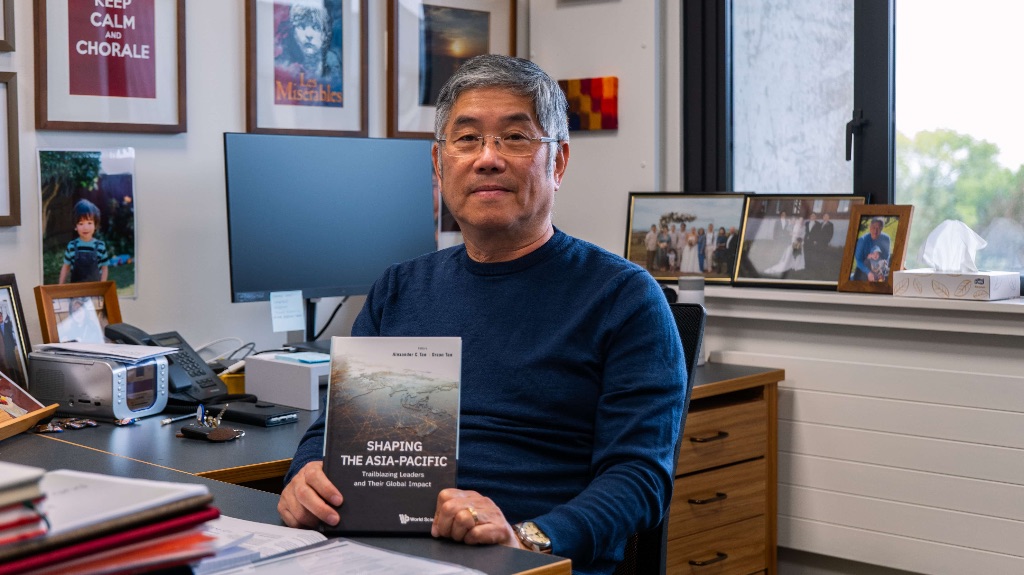
Shaping the Asia-Pacific examines how political leaders across the region have influenced international relations as the Asia-Pacific region evolved from a relatively marginal position in global politics into a major geopolitical and economic force.
Professor Tan, Associate Dean for Research in the Faculty of Arts, Humanities and Social Sciences and Professor of Political Science at Te Whare Wānanga o Waitaha | University of Canterbury (UC), says the book addresses a significant gap in the literature. An internationally respected scholar, Professor Tan has more than 30 years’ experience studying Asia-Pacific politics.
“This book focuses on the role of leaders in the Asia-Pacific region, on how these leaders have helped change the trajectory or the conduct of the international relations of the Asia-Pacific,” he says.
The project brought together specialists from around the world to examine the role of leaders in shaping foreign policy, building alliances and influencing regional cooperation.
The book examines leaders whose decisions have had lasting regional and global influence, including Shinzo Abe, Bob Hawke, Kim Dae-jung, Narendra Modi, Deng Xiaoping, Xi Jinping, Lee Kuan Yew, Mahathir Mohamad, Fidel Ramos and Lee Teng-hui.
Professor Tan says the research highlights the critical role leaders play in shaping international relations.
“A key learning of the book is the importance of leaders in the arena of foreign policy and that leaders can lead in many different ways.”
Among the examples explored is former Australian Prime Minister Bob Hawke, who helped reorient Australia towards the Asia-Pacific and played a key role in establishing the Asia-Pacific Economic Cooperation (APEC) forum.
China’s Deng Xiaoping is also examined for his leadership in opening China to the world, a move that transformed both China’s economy and the balance of power in the region.
“I am so very happy with the outcome,” Professor Tan says. “The chapters are well written, and the book provides a first record of Asia Pacific leaders and their influence on Asia-Pacific international relations.”
 Gordon Campbell: On How US Courts Are Helping Donald Trump Steal The Mid-Terms
 Forest And Bird: Government Biodiversity Credit Scheme Welcomed As Opportunity For Restoration
 Office of the Ombudsman: Ombudsman Publishes Findings On Ministry Of Education Sensitive Claims Scheme
 Nelson City Council: Mayor Welcomes Auditor-General Decision Not To Prosecute Councillor
 Johnnie Freeland: Ko Tātou Tātou - Climate Action In Aotearoa Begins With Relationship
 Zero Waste Network Aotearoa: Container Return Scheme Bill Would Double Recycling Rates And Put Money Back In Households
 Wellington City Council: Statement From The Wellington Mayoral Forum On Options For Regional Governance Reform


