
 Scoop has an Ethical Paywall


Demand For Nelson’s Electric Buses Up Amid Fuel Crisis
The month of March saw 95,656 passenger journeys on the eBus. A new high since the upgraded service was introduced in 2023.
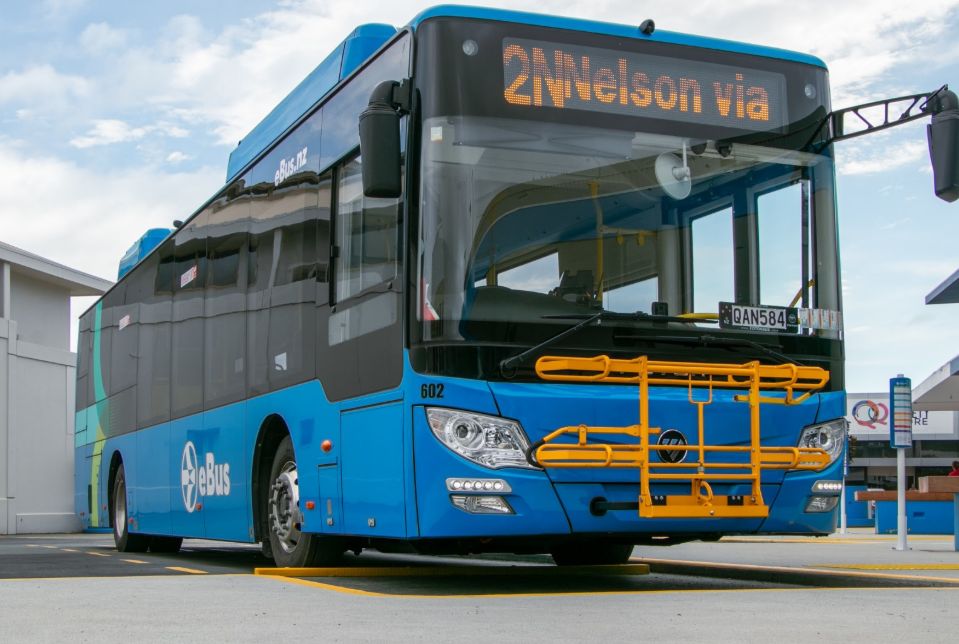
While ‘March Madness’ is a yearly reality for public transport, March 2026 has been particularly ‘mad’.
“March 2026 saw an 8% rise in eBus use, the highest in the 32 months since the eBus service was introduced. This reflects the sharp increase in fuel costs and the choice presented by the eBus service,” says Nelson Mayor and Regional Transport Committee Chair Nick Smith.
The Wakefield route had a standout month with a 40% increase, followed by a 15% increase on Route 3 (Atawhai to Hospital) and Route 1 (Nelson to Richmond via Waimea).
“Diesel has gone from $1.85/l in Feb to $3.42 today,” says Nick. “Our Councils would today be facing an extra bill of about $50,000 a month or $600,000 a year if we had decided to stick with diesel buses. The other benefit is the service is not facing any risk from potential fuel shortages, it’s reducing the region’s greenhouse gas emissions, it’s cleaner in not emitting PM10 and nitrous oxide and also quieter.”
Sensor data from major routes across Nelson/Tasman show a noticeable decrease in traffic volumes during March, as more people appeared to either be choosing alternative transport options or reducing travel.
In Tasman, the Salisbury/Champion Road recorded a 7% drop in vehicle movements over the month. 184,717 vehicles were recorded during the first week of March. By the final week of the month, that number had fallen to 171,795 — a reduction of nearly 13,000 vehicle movements.
Across the boundary in Nelson, Main Road Stoke recorded a decrease of an average of 500 vehicles a day, a decrease of 14,000 vehicles between February 2026 and March 2026, vehicle count data across the Nelson region indicates there has been a continual decrease in vehicle usage since October 2025.
“This drop in traffic volumes shows just how much pressure households and businesses are under from the hike in fuel prices,” says Nick. “It is clear that people are not just finding alternatives but traveling less.”
The increase in demand for public transport comes as eBus prepares to launch earlier services on Tuesday 7 April.
“Our Councils have moved quickly to bring these additional bus services forward in response to the pressure on household budgets from the global fuel crisis. These earlier services will allow commuters to get into Nelson for 7am and 7:30am starts, and into Richmond for 7:30am and 8am starts.”
Other forms of transport have also seen an increase with cycling counts on the Railway Reserve also increasing.
Cycle data has shown that March 2026 was the busiest March in the past six years, with 1,200 more cyclists recorded than in March 2025.
“Council will continue to monitor transport choices in the region as this fuel crisis unfolds and work with government on how we can best support people to adapt to the unprecedented rise in fuel costs,” says Nick.
 Gordon Campbell: On How US Courts Are Helping Donald Trump Steal The Mid-Terms
 Forest And Bird: Government Biodiversity Credit Scheme Welcomed As Opportunity For Restoration
 Office of the Ombudsman: Ombudsman Publishes Findings On Ministry Of Education Sensitive Claims Scheme
 Nelson City Council: Mayor Welcomes Auditor-General Decision Not To Prosecute Councillor
 Johnnie Freeland: Ko Tātou Tātou - Climate Action In Aotearoa Begins With Relationship
 Zero Waste Network Aotearoa: Container Return Scheme Bill Would Double Recycling Rates And Put Money Back In Households
 Wellington City Council: Statement From The Wellington Mayoral Forum On Options For Regional Governance Reform


